Last updated November 18, 2026





Free written scope consultation - allowances, timeline, and change-order rules on paper before a single trade is scheduled
Construction Emergency Preparedness Guide for Costa Mesa Homes
Most construction emergencies we see in Costa Mesa homes don’t start with a bang. They start with a small drip behind a vanity, a roof flashing that lifted in a Santa Ana wind event, or a hairline foundation crack that has been quietly widening since the last wet winter. The failure becomes “urgent” on a Friday at 9 p.m., when no city inspector is available and the contractor you called is already gone for the weekend. What separates a manageable repair from a compromised insurance claim is almost never luck. It’s the four hours between the moment you notice something is wrong and the moment someone else starts making decisions for you. This guide walks you through those hours. You’ll learn what’s safe to stabilize yourself, what requires a licensed trade, exactly what to photograph before anything gets touched, and how to know whether temporary work in Costa Mesa needs a permit before you start.
Quick Answer
If a construction emergency hits your Costa Mesa home, your first job is not repair: it is documentation. Stop the source if you safely can (water shutoff, breaker, gas valve), photograph everything before any mitigation starts, and call the city’s building department before performing temporary structural work, since emergency stabilization near the coast often follows an expedited permit path. Then call a licensed mitigation contractor for extraction and shoring, and a licensed general contractor for the rebuild.
Styles & brands we work with
- Kitchen remodeling
- Bathroom remodeling
- Home additions & ADU
- Roofing
- Windows & doors
- Driveway & pavers
- Fence
Table of Contents
- The First-Response Sequence for the Five Most Common Costa Mesa Construction Emergencies
- What to Photograph and Document Before Any Mitigation Work Starts
- Do Temporary Stabilization Repairs Need a Permit in Costa Mesa?
- Mitigation Contractor vs. Licensed GC: Who to Call First
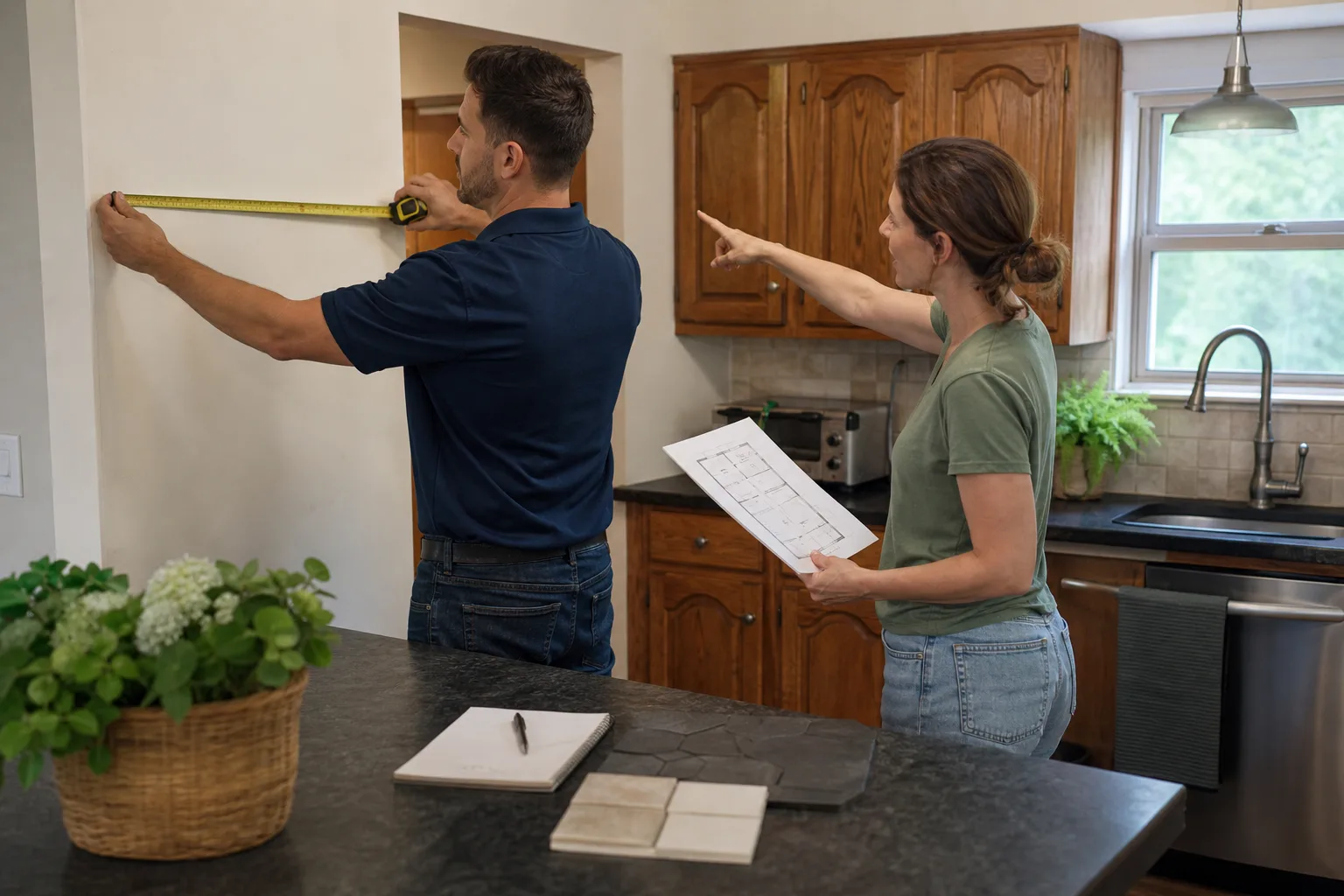
- What’s in Writing When We Show Up for an Emergency Estimate
- Deferred Maintenance That Becomes Urgent: A Costa Mesa Checklist
- Working With Your Insurance Adjuster Without Getting Undersold
The First-Response Sequence for the Five Most Common Costa Mesa Construction Emergencies
In our experience, nearly all the calls that come in as “emergencies” fall into five categories. Knowing your first move for each one buys you time, limits the damage, and keeps your claim intact.
1. Water Intrusion
Costa Mesa’s marine layer and its wet winters put a lot of pressure on roofs, window flashing, and the plumbing inside older homes near the Eastside and the Westside. A slow leak won’t announce itself, so when you notice buckling drywall or a musty smell, act quickly.
- Shut off the water at the main valve near the meter.
- Kill the breaker to any room with outlets near water.
- Photograph the source, the wet materials, and any damage to finishes before you touch anything.
- Call a mitigation contractor for extraction and drying. Do not tear out drywall yourself; adjusters want that decision documented.
2. Gas Odor
This is the one category where you call 911 before anyone else. If you smell gas, get everyone out, don’t flip switches or use your phone inside, and let the utility and fire department handle it. A licensed plumber or GC handles the repair only after the gas is confirmed safe. We never ask a homeowner to troubleshoot gas lines themselves, and neither should anyone else.
3. Electrical Failure
Older homes in the area still run original panels from the 1950s and 1960s. If you smell burning insulation or a breaker won’t reset, shut off the main at the panel (only if the panel itself is not the source of the smell or heat), then call a licensed electrician. Do this from a dry position and never with wet hands.
4. Partial Structural Failure
A sagging header, a cracked ceiling around a beam, or a wall that’s moved overnight after a Santa Ana wind event needs eyes on it fast. Don’t prop anything against a load-bearing element. Shut off utilities that run through the affected area and call a licensed GC for an emergency assessment. Emergency shoring is real work, and it needs a professional eye.
5. Foundation Movement
Foundation cracks that open quickly, doors that suddenly rub, or slabs that shift after heavy rain are the ones that rarely wait for Monday. If you can fit a dime into a crack that’s widened in a week, call a licensed GC for an emergency evaluation and photograph the crack with a coin for scale. The photo will matter to your adjuster later.
What to Photograph and Document Before Any Mitigation Work Starts
Your insurance adjuster will ask for a specific set of images and notes. If you wait until after a mitigation crew has pulled wet carpet and set up dehumidifiers, you may have just deleted half your claim. Here’s the shot list we recommend to every homeowner in Costa Mesa before a single tool comes out.
- Wide shots first. Every wall of the affected room from the doorway, plus an exterior shot of the house for context.
- Source shots. The failed supply line, the split flashing, the crack in the slab, the water-stained ceiling. Get within a foot and get a second wide shot with surrounding context.
- Scale references. Place a coin, a tape measure, or your hand next to cracks and gaps so the adjuster can read the size without a site visit.
- Moisture readings. If you have a cheap pin meter, photograph the number against the wet material. It’s more persuasive than a description.
- Contents damage. Photograph furniture, rugs, and electronics separately from the structure. Structure and contents are separate line items on your policy.
- Written timeline. Open a note on your phone and log the time you noticed the issue, the time you called a pro, and the time of every subsequent decision. Adjusters love a timeline.
- Receipts. Keep every receipt for fans, heaters, dehumidifiers, hotel nights, and any emergency material you bought. Reimbursement is itemized, not estimated.
Save all of it to a cloud folder and text a copy to a family member or trusted neighbor. If your phone dies or gets soaked, you’ll want a second copy you didn’t have to think about.
Do Temporary Stabilization Repairs Need a Permit in Costa Mesa?
Often yes, but Costa Mesa has an emergency path for imminent hazard cases that many homeowners don’t know exists. The rule of thumb: if the work is stabilizing a hazard (shoring a sagging header, bracing a cracked foundation wall, tarping a failed roof) and it’s genuinely urgent, call the city’s building division before you start and ask specifically about the emergency repair process. They will tell you what documentation they need and whether an expedited permit is appropriate.
The trap is treating “temporary” as a free pass. A plastic tarp over a roof leak is not the same as nailing a brace to a beam. Once temporary shoring is in place and the hazard is stabilized, you still owe the city a permit for the permanent fix. Skipping that step can complicate your insurance claim and blow up a future sale of the house. We’ve seen this go badly more than once in Costa Mesa, and the fix is always more expensive than the permit would have been.
If you’re unsure, call. Builders talk to their local building department every week. It’s a five-minute call and it protects the rest of the process.
Mitigation Contractor vs. Licensed GC: Who to Call First
These are two different trades, and getting the order right saves real money. A mitigation contractor handles the urgent, temporary phase: water extraction, drying, mold containment, debris removal, and emergency shoring. A licensed GC handles the permanent rebuild: framing, drywall, cabinetry, roofing, and the finish work that makes the house a home again.
- Mitigation first. Call them the night of the event. They stop further damage and produce the drying logs your insurance carrier will require.
- Get the mitigation scope of work in writing. Ask for the drying plan, the equipment placement, and the stop date. Don’t let them keep equipment on-site indefinitely without documentation.
- Call the GC while mitigation is running. Your GC can start the rebuild estimate from the same photos and the same moisture readings, so the two scopes line up.
- Never let the mitigation contractor self-award the rebuild. You’re the one signing, and you’re the one who has to live with the finished kitchen or bathroom.
- Get the written rebuild price before any permanent work starts. That’s the moment where non-itemized bids turn into surprise invoices.
For the permanent rebuild itself, this is the moment to bring in a General Contractor in Costa Mesa who can hold the whole scope and pull the correct permits.
What’s in Writing When We Show Up for an Emergency Estimate
An emergency puts a homeowner under pressure, and pressure is exactly where bad contractors make their money. Under Bradford Remodeling Co Costa Mesa’s operating framework, The Garrison Standard, you never have to make an emergency decision without a document in your hand.
Here’s what our team brings to an emergency estimate:
- A written price before any work starts. Not a verbal ballpark, not a “we’ll see once we open it up.” A line-item range that holds.
- The 365-Day Done Right Promise, in writing. Every completed project is covered for a full year. If the work fails inside that window, we come back and correct it at no charge. That applies to emergency rebuilds the same as to planned kitchen replacements.
- Background-checked, uniformed technicians. You know exactly who is walking through your door before the crew shows up. In a real emergency that’s not a small thing.
- Documented brand specifications. When the rebuild calls for cabinets or surfaces, we work from a documented roster including KraftMaid, Wellborn, Cambria, and Kohler. You’ll be specifying real products with manufacturer specs, not “builder grade, whatever’s available.”
- A live person on the phone, 24 hours a day. Call (855) 659-2556 and a real person answers. Not a voicemail, not a callback queue.
That’s the whole point of The Garrison Standard: you’re not being asked to trust a stranger in a crisis. You’re holding a document that tells you exactly what you’re getting and what happens if it fails.
Deferred Maintenance That Becomes Urgent: A Costa Mesa Checklist
Marine air and seasonal rain do a number on coastal Orange County homes, and most of what we call “emergencies” were visible during a routine walkthrough months earlier. Here’s the walkthrough we recommend doing twice a year, once in early fall before the rain and once in spring:
- Roof and flashing. Check the roof penetrations around skylights, HVAC boots, and the chimney. Coastal homes in Costa Mesa see fascia and soffit rot that starts small and shows up as a ceiling stain.
- Window and door seals. Look for failed caulk around exterior windows and doors. Therma-Tru entry doors and James Hardie siding last decades with proper sealing, but the sealant itself needs refreshing.
- Supply lines and shutoffs. Braided stainless supply lines under sinks and behind the washer are cheap insurance. If yours are older rubber, replace them.
- Water heater and pan. Check the pan drain and the T&P valve discharge. A failing pan in a second-floor closet is one of the most expensive leaks we see.
- Foundation sightings. Walk the perimeter with a flashlight. New cracks, popped stucco, or doors that stick in the same weather pattern deserve a second look.
- Drainage. Ensure downspouts extend away from the foundation and that patio pavers (including Unilock and Techo-Bloc installs) haven’t settled to the point of pooling water against the wall.
- Gas and electrical. Have the panel labeled, know where the main gas valve is, and once a year have an electrician look at any panel older than 30 years.
If the walkthrough turns up anything in a bathroom or kitchen, that’s the moment to price a planned Bathroom Remodeling in Costa Mesa or Kitchen Remodeling in Costa Mesa project instead of waiting for it to fail on a Friday night.
Working With Your Insurance Adjuster Without Getting Undersold
Adjusters are not your enemy, but they are working from a scope that may not match what the rebuild actually requires in a Costa Mesa home. Older construction in the area often uses details that a generic scope misses, and the difference between a settled claim and a fight comes down to documentation and specificity.
- Submit your own photo set and timeline. Don’t rely on the mitigation contractor’s photos alone.
- Get a written contractor scope that matches the adjuster’s line items. Where they diverge, you want the difference written down in plain language so you can question each line.
- Ask for the depreciation schedule in writing. Recoverable depreciation is real money, and many homeowners leave it on the table because nobody asked.
- Know your deductible and your duty to mitigate. Documenting the emergency response is part of your obligation, not a favor.
- Don’t sign a release until the rebuild is complete. Some carriers will close out the claim before the final scope is done.
When your rebuild quote is written and itemized, matching it to the adjuster’s line items becomes a straightforward conversation instead of a negotiation. That’s the point of pricing everything in advance.
Common Mistakes to Avoid
- Teaming out wet materials before photographing. Once the drywall is on the curb, it’s harder to prove the water didn’t come from a roof flashing failure instead of a plumbing supply line.
- Letting the mitigation contractor award the rebuild to themselves. The extraction crew and the rebuild should be separately priced and separately chosen.
- Skipping the call to the city. In Costa Mesa, an emergency stabilization that isn’t documented with the building division can create complications when the permanent fix is permitted.
- Believing a verbal ballpark. Under pressure, “we’ll see once we open it up” turns into a surprise invoice. Get the price in writing before the first tool comes out.
- Ignoring a foundation crack because it’s “not getting bigger.” Photograph it with a coin for scale and re-shoot in two weeks. Coast-side cracks move with the seasons.
- Treating temporary shoring as a permanent fix. A brace in the garage holding up a sagging header is not the repair, and your insurer and the city will both eventually notice.
- Replacing the visible fix but missing the source. If the supply line burst, replace the whole set, not just the one that failed. The other two are the same age.
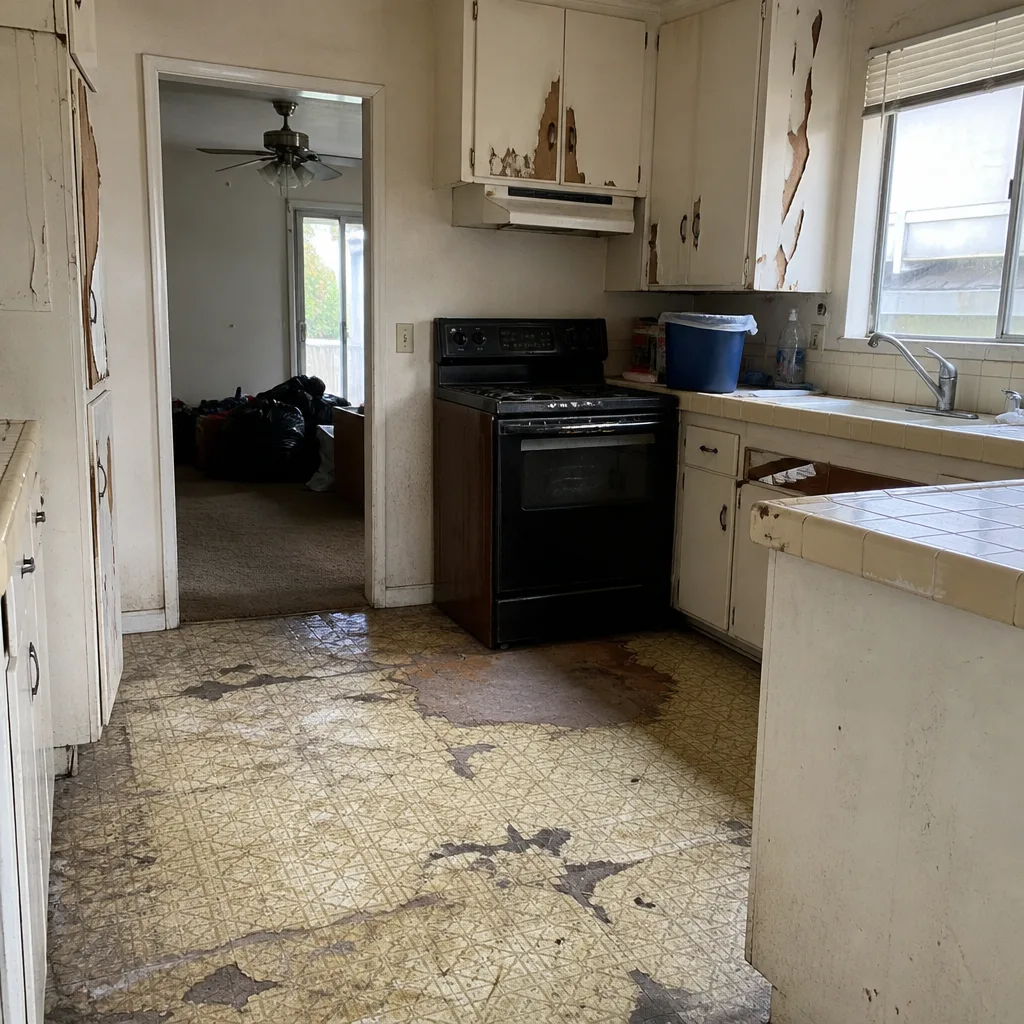
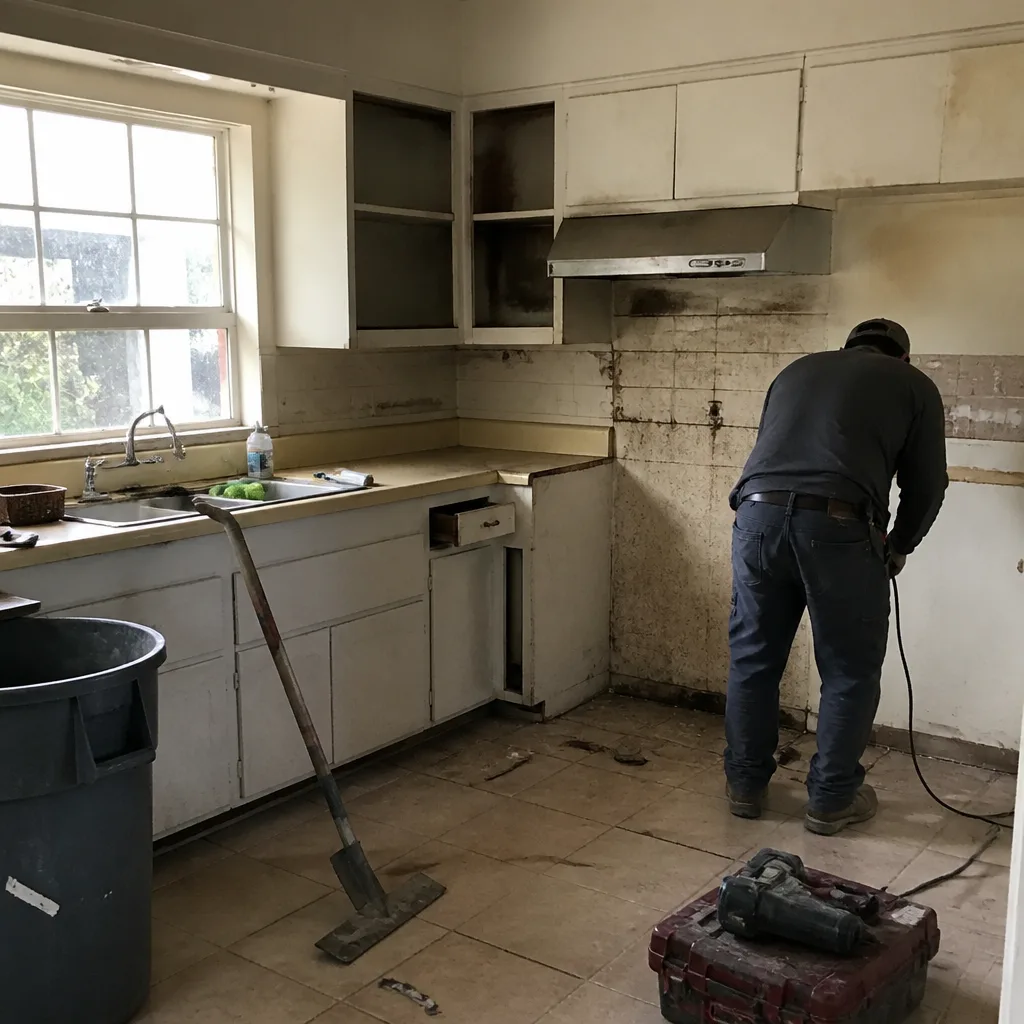
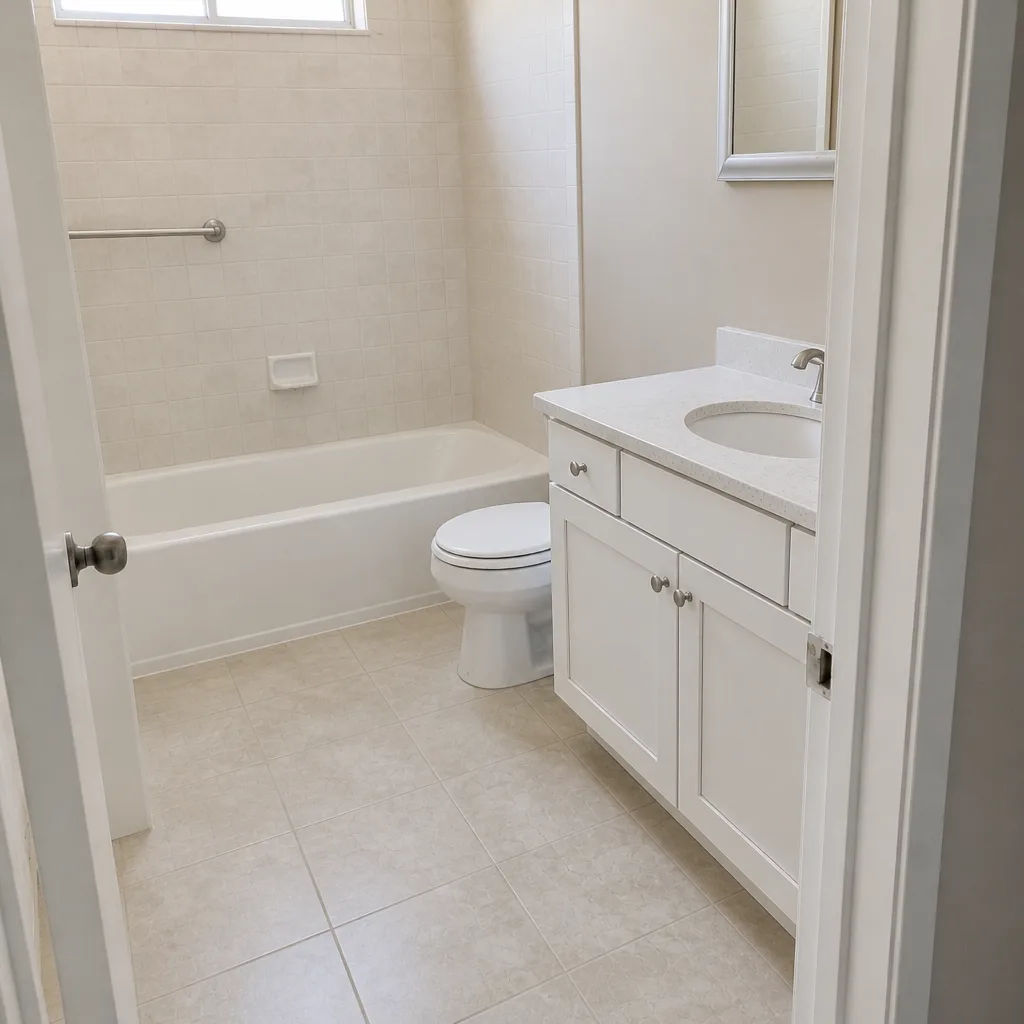
See the difference
 Before
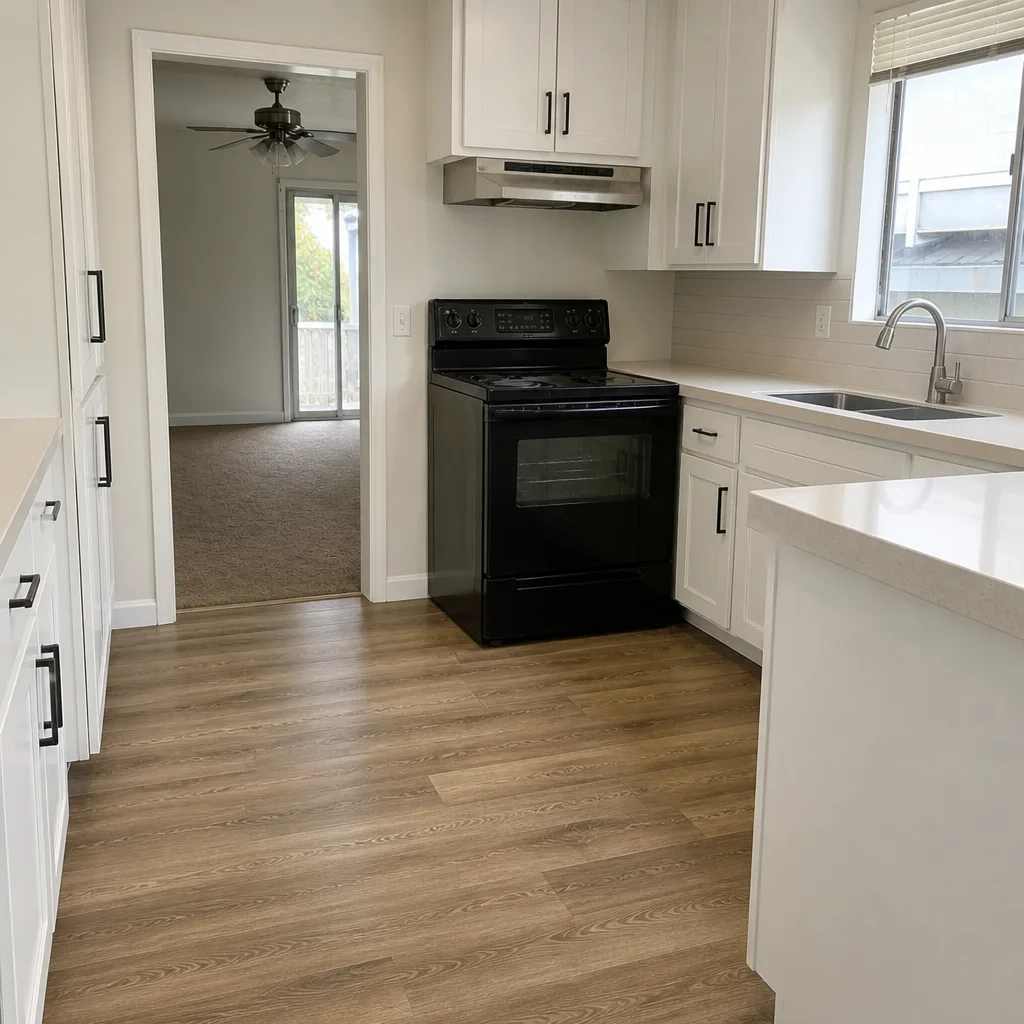 After
 Before
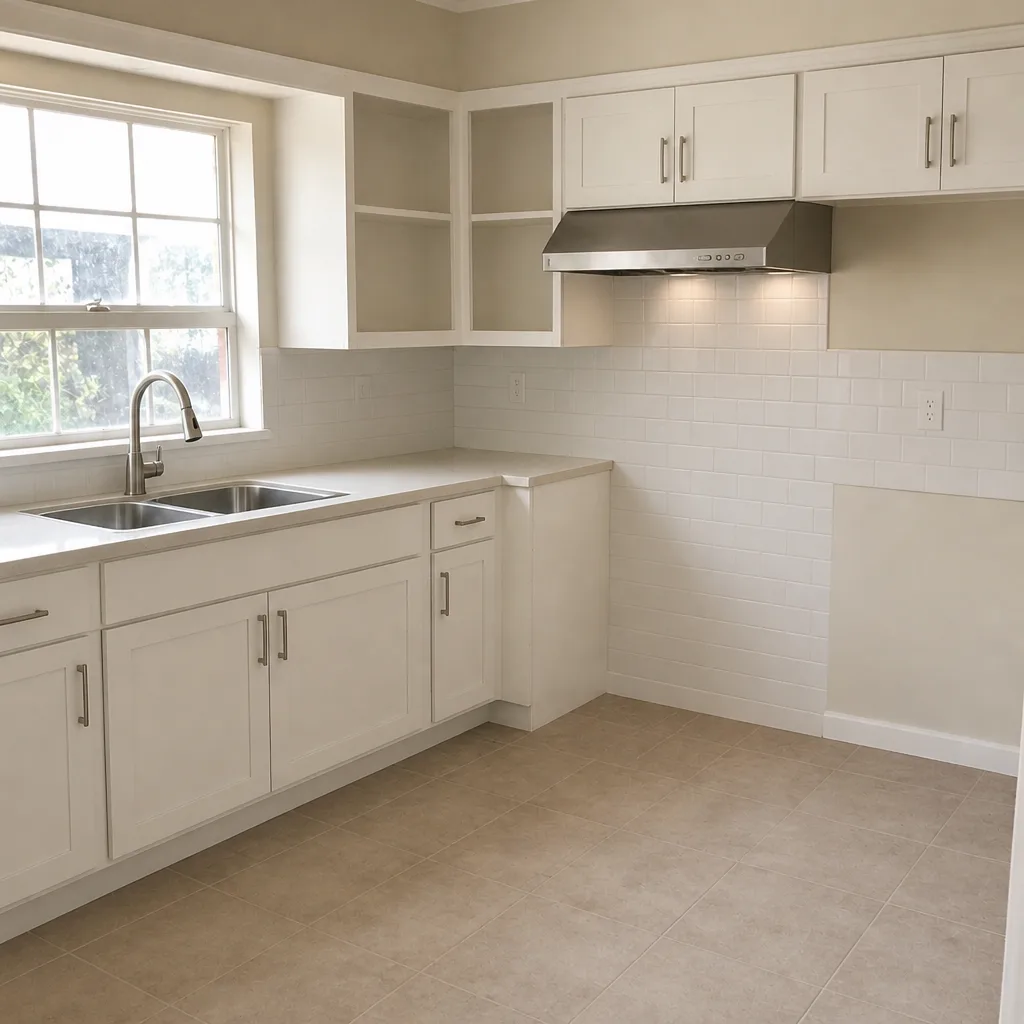 After
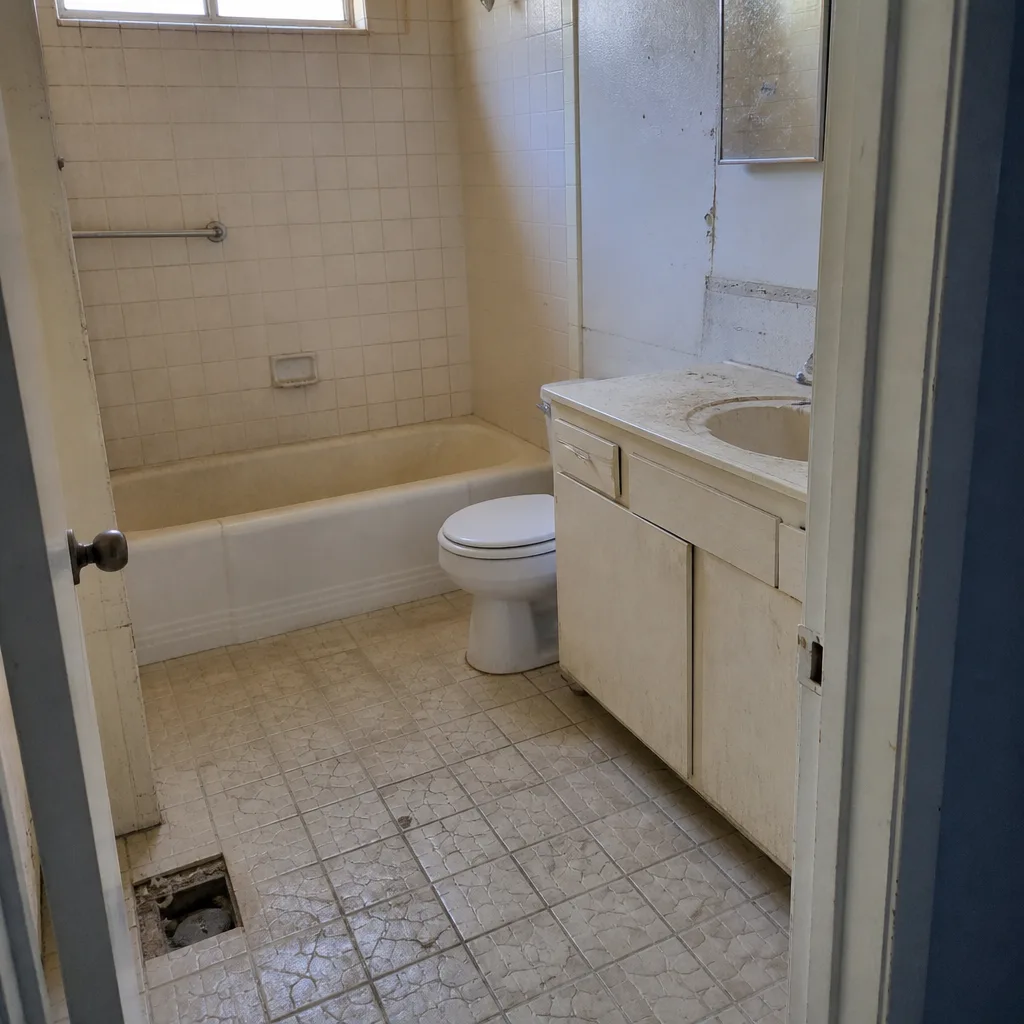 Before
 After
When to Call a Professional
Call a licensed professional the moment water is running into a wall cavity you can’t see, when the repair involves anything behind drywall, when a gas smell is present, when a load-bearing element has moved, or when the crack in the slab has widened in a period of days rather than months. Do not attempt structural shoring, panel replacements, or gas valve work on your own; those are the categories where trying to save money can cost you the house or your safety. Bradford Remodeling Co Costa Mesa offers free estimates in Costa Mesa, and a live person answers the phone around the clock. Call (855) 659-2556 to schedule yours, and know that the price you get in writing is the price you’ll see.
Frequently Asked Questions
Shut off the main water valve near your meter, kill the breaker to any room with standing water near outlets, and photograph the source and damage before anyone touches a towel. Then call a mitigation contractor for extraction; your future claim depends on the photos, not on how fast you dry the floor.
Often yes, but Costa Mesa maintains an emergency repair path for imminent hazard cases. Call the city’s building division before you start; they’ll confirm what documentation they need and whether an expedited permit applies. Treat temporary shoring as a documented step, not a workaround.
Typical emergency mitigation runs $1,500 to $6,000 depending on square footage affected and equipment time, and permanent rebuild costs vary widely with the scope. The rebuild price should always be written and itemized before work begins. Call (855) 659-2556 for a free estimate with a written price range on the rebuild.
Most homeowners’ policies cover sudden and accidental damage, such as a burst supply line or storm-driven roof failure, but not deferred maintenance that was visible for months. Your photo timeline and moisture readings are what prove the damage was sudden. Document first, then call.
You can safely shut off water and power, move valuables, and photograph damage. Structural shoring, electrical panel work, and gas line repairs should always go to a licensed trade. If you’re pulling wet drywall, wait until you’ve documented the moisture readings and shared them with your adjuster.
Light mitigation and rebuilds often finish in one to three weeks; major structural rebuilds that require permits and inspections can run four to eight weeks or longer. A written scope with milestones on the day of the estimate is what keeps the timeline honest, and that’s what we deliver.
The Bottom Line
Construction emergencies in Costa Mesa homes are almost always the last chapter of a deferred-maintenance story. The four hours after you notice the problem determine whether your claim is clean, whether the repair is permitted, and whether the price you agreed to is the price you pay. Stop what you can safely stop, photograph everything before anyone touches anything, call the city before you stabilize, call mitigation before you rebuild, and insist on a written price before a single tool comes out. That’s the framework that turns a bad night into a manageable project, and it’s the standard we bring to every call. If you want a second set of eyes on a problem before it becomes the next emergency, start with our team at Bradford Remodeling Co Costa Mesa.
Ready to price a rebuild, a kitchen, or a whole-home scope with a written number in hand? Call (855) 659-2556 for a free estimate. A real person answers, 24 hours a day, and The Garrison Standard applies from the first call.
Written by the team at Bradford Remodeling Co Costa Mesa.