Last updated November 18, 2026



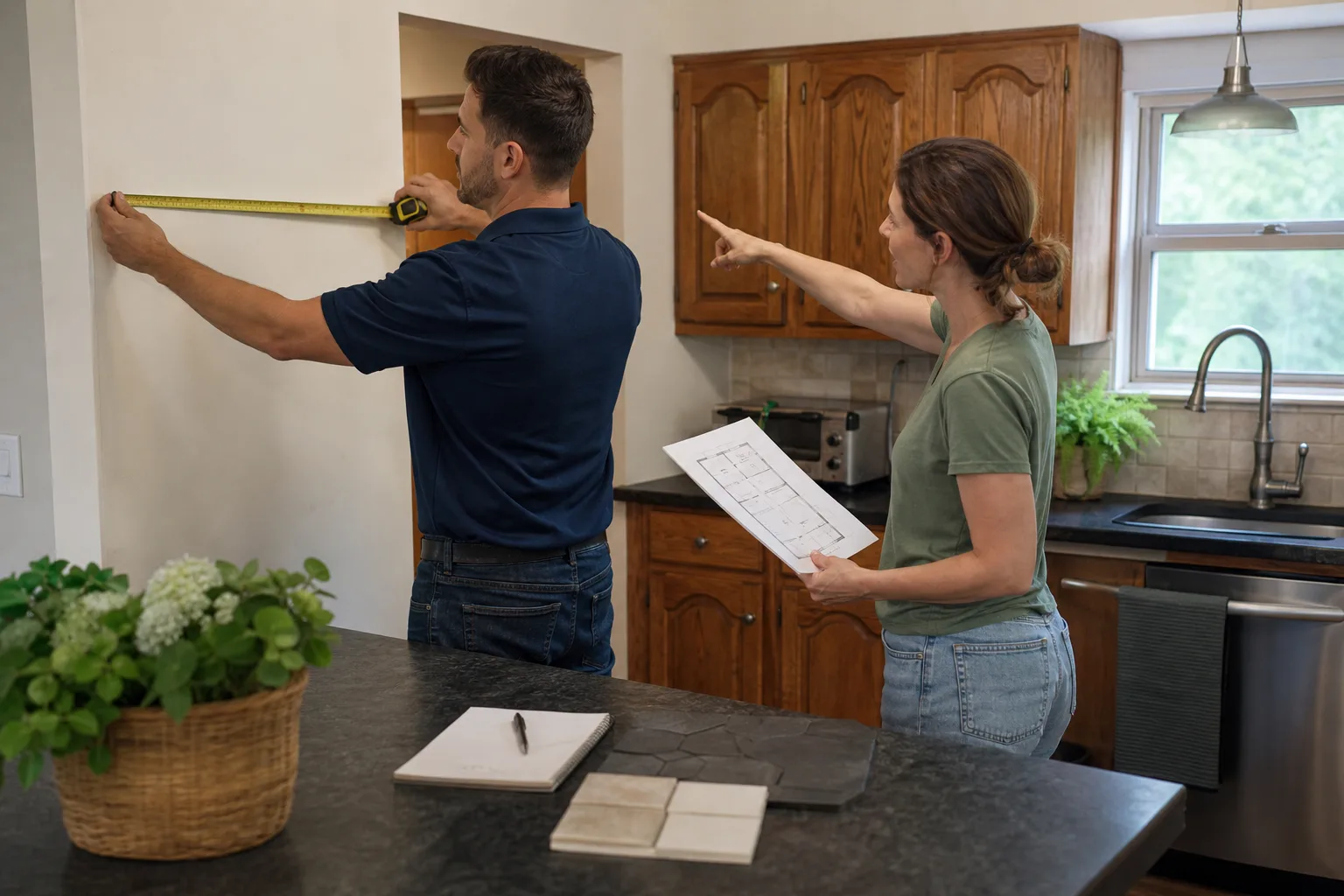
Free written scope consultation - allowances, timeline, and change-order rules on paper before a single trade is scheduled
DIY vs Professional Bathroom Remodeling: What’s Safe to Do Yourself
Replacing a toilet is a Saturday project. Moving that same toilet six inches to the left is a different animal entirely. It needs a permit, a licensed plumber for the drain rough-in, and an inspection before the drywall goes back up. Skip that step and you’ve created an unpermitted condition you’ll have to disclose when you sell the house. That gap between “looks simple” and “legally requires a licensed trade” is where most bathroom remodels go sideways, and it’s the whole subject of this guide. We’ve watched it play out on jobs across Costa Mesa, and the pattern is consistent: the homeowner’s skill was rarely the problem. The permit jurisdiction was.
Quick Answer
Cosmetic work is safe to do yourself: painting, swapping fixtures in kind, replacing a toilet, installing accessories, and tearing out old tile. Anything that touches the wet wall, moves a drain or supply line, changes a wall or door opening, or adds an electrical circuit requires a permit and typically a licensed contractor in California. The dividing line isn’t your confidence level. It’s whether the work falls under a permit requirement, because that’s the line that carries legal and financial consequences at resale.
Styles & brands we work with
- Kitchen remodeling
- Bathroom remodeling
- Home additions & ADU
- Roofing
- Windows & doors
- Driveway & pavers
- Fence
Table of Contents
- Where California Draws the Legal Line
- Tasks That Are Genuinely Safe for a Competent DIYer
- Tasks That Look DIY-Simple but Carry Hidden Risk
- What Unpermitted Work Means at Resale in California
- A Decision Framework Before You Pick Up a Tool
- The Moisture System Is the Whole Game
- Costa Mesa Specifics: Climate, Code, and Resale
- Common Mistakes to Avoid
- When to Call a Professional
- Frequently Asked Questions
Where California Draws the Legal Line
California separates bathroom work into two buckets: cosmetic and permitted. Cosmetic work is a repair or replacement of an existing element with a like element in the same location. Permitted work changes the building’s systems, structure, or layout. The distinction is objective, and the state doesn’t care whether you did a clean job.
Here’s how the split usually lands for a bathroom:
- Cosmetic (no permit): repainting walls and ceilings, swapping a faucet or showerhead for a like unit, replacing a vanity cabinet of the same size in the same spot, replacing a toilet in the existing rough-in, changing light fixtures on existing circuits, installing towel bars and mirrors, swapping hardware.
- Permitted work: moving or adding a drain, supply line, or vent; relocating a toilet; moving or removing a wall; enlarging or shrinking a window or door (which affects egress); adding or moving an electrical circuit; installing a new exhaust fan where none existed; converting a tub to a walk-in shower; any change to the waterproofing envelope that alters the shower’s dimensions.
That means a “simple” primary bath refresh in Costa Mesa can turn into permitted work the moment you decide to move the tub drain two feet to fit a larger shower. We see it constantly in the older 1960s and 1970s ranch homes around the Eastside and Mesa Verde neighborhoods, where the original layout has a hall bath that’s ripe for reconfiguration. The reconfiguration is what pulls it into permit territory, not the cosmetic finish.
If you’re weighing whether your project crosses the line, that’s a conversation worth having with a licensed contractor before you buy materials. Our Bathroom Remodeling in Costa Mesa service page lays out how we scope permits for a job before any work starts.
Tasks That Are Genuinely Safe for a Competent DIYer
We’re not going to talk you out of work you can actually do. Some bathroom tasks are well within reach for a homeowner with the right tools and a little patience. They share three traits: no permit required, no risk of catastrophic water damage if slightly off, and no electrical work in a wet zone.
- Tile demolition. You need a hammer, a wide chisel, safety glasses, a respirator for silica dust, and a plan for disposal. Work carefully around plumbing penetrations. Do not cut into the substrate unless you’re prepared to replace it.
- Painting. The single best ROI cosmetic task in a bathroom. Use a bathroom-rated paint with a mold-resistant additive. Cure time matters more than product in a humid room; give it a full 72 hours before running the shower.
- Vanity swap in kind. Replacing a 36-inch single vanity with another 36-inch single vanity of the same footprint is a like-for-like swap. Plumbing stays put. If supply lines are old braided hoses, replace them while you’re in there.
- Toilet replacement. Same rough-in (typically 12-inch in most Costa Mesa homes), same drain location. Buy a wax ring, a new supply line, and a shutoff valve. Plan for two hours minimum.
- Accessory and hardware installation. Towel bars, robe hooks, TP holders, mirrors, glass shelf brackets. Use proper anchors for tile, and never drill into tile over a niche without knowing where the waterproofing membrane sits.
- Faucet and showerhead swap. Same connections, same rough-in valve. If the rough-in valve is 20 years old and the new trim doesn’t fit, stop, call a plumber.
What these have in common: none of them change the building’s systems, structure, or footprint. That’s the safety bar. In our experience, homeowners who stay on the cosmetic side of that line end up with a bathroom that looks genuinely improved and a house that appraises without surprises.
Tasks That Look DIY-Simple but Carry Hidden Risk
These are the ones that get people. They look like the tasks above, and the internet makes them look easy. In practice, three of them are moisture-system work and one is electrical, and the failure modes are expensive or dangerous.
Shower liner installation
The waterproofing membrane behind the tile is the actual shower. The tile is decoration. A traditional PVC liner or a modern bonded membrane must be sloped correctly to the drain, lapped correctly at seams, and sealed at the curb, corners, and drain flange. Get any of that wrong and the failure doesn’t show for 18 to 36 months. Then you’re looking at a full tear-out because the tile warranty from the manufacturer – and the labor backing it – is void when the substrate wasn’t installed per spec. In a coastal climate like Costa Mesa’s, where ambient humidity is high year-round, a slow leak behind tile can feed mold in the wall cavity before you notice a soft grout line.
Exhaust fan wiring
Bathroom exhaust fans must be on a circuit that meets wet-location requirements. In California, that typically means GFCI protection. If your bathroom had no fan and you’re adding one, that’s a new branch circuit – which is permitted work. If you’re replacing a fan that’s already there, you may be able to reuse the existing wire, but only if it’s on a properly protected circuit and you verify it with a tester before touching it. Fan sizing matters too: a fan rated too low for the cubic footage of the room won’t clear moisture, and one pulling too much can backdraft your water heater in a tightly sealed house.
Shower mixing valve installation
The pressure-balance or thermostatic mixing valve behind the shower trim is a scald-prevention device. It’s tuned at installation. If the valve isn’t adjusted correctly, or if you install a non-balancing valve in a house with a tankless water heater, you can get a scalding temperature swing when someone flushes a toilet on the other side of the house. That’s a real safety issue, not a cosmetic one, and we don’t recommend a DIY install on any mixing valve.
Electrical in wet zones generally
Any outlet, switch, or light fixture inside a bathroom is in a wet zone and must be GFCI-protected and rated for the location. Pull a permit, hire a licensed electrician. This is the one category where we don’t have a “well, if you’re careful” caveat.
Our General Contractor in Costa Mesa team handles the permit scope and the licensed trades for these exact tasks. It’s work that doesn’t belong in a homeowner’s weekend.
What Unpermitted Work Means at Resale in California
Unpermitted work is not a technicality. In California, sellers are required to disclose known unpermitted work on the Transfer Disclosure Statement, and a buyer’s home inspector will find it. Inspectors look for the telltale signs: a newer drain location that doesn’t match the original floor plan, a bathroom vanity outlet without GFCI protection, a fan with no permit sticker on the panel, a shower that was clearly converted from a tub with no record of a plumbing permit at the city.
Here’s what typically happens when unpermitted bathroom work surfaces during a sale:
- Buyer’s inspector flags it. The report describes the discrepancy between the current layout and the city’s records.
- Buyer requests a credit or repair. In a typical market, that credit runs well over the cost of the original work, often two to three times, because the buyer is pricing in the risk and the hassle of permitting after the fact.
- Lender gets involved. If the buyer is using a conventional or FHA loan, an appraisal issue tied to the discrepancy can stall the sale.
- You’re now retroactively permitting. That means opening walls for inspection, paying permit fees and penalties, and potentially redoing the work you thought was finished five years ago.
In our experience working Costa Mesa bathrooms, the retroactive permit process on a shower that was reconfigured without a permit typically costs more than the original remodel did. The savings from a DIY shortcut don’t survive the sale.
A Decision Framework Before You Pick Up a Tool
Before you buy anything, run the project through three questions. If the answer to any of them is “yes,” stop and get the permit question answered first.
- Does the work touch the wet wall? The wet wall is the plumbing wall behind the shower, tub, or toilet. Opening it and changing anything inside it triggers a plumbing permit.
- Does the work move a drain, supply line, or vent? Any relocation, not just an addition. Moving a drain two inches is a permit.
- Does the work add or move an electrical circuit? New outlet, new fan, new light where none existed, or a circuit moved to a different wall.
If all three are “no,” you’re likely in cosmetic territory and can proceed as a DIY project. If any is “yes,” the correct sequence is: figure out the permit requirement, then decide whether to pull the permit yourself as a homeowner (California allows homeowner permits for owner-occupied single-family homes, in most jurisdictions, with limits) or hire a licensed contractor for the permitted portion.
That last point matters. Not every city allows the same homeowner permit scope. The City of Costa Mesa’s building department has its own procedures and fee schedule, and the requirements can differ from neighboring cities like Newport Beach or Huntington Beach. Verify with the city before you assume anything.
The Moisture System Is the Whole Game
We think about bathroom remodeling in two layers. The visible layer is what you see: tile, paint, fixtures, lighting. The invisible layer is the moisture system: waterproofing membrane, vapor barrier, drainage slope, ventilation, and the substrate that carries them.
DIY work is fine on the visible layer. It’s rarely fine on the invisible layer, and this is the part most online tutorials gloss over. A bathroom’s lifespan is set by the moisture system. Get it right and the tile stays put for 20 years. Get it wrong and the soft spot in the ceiling of your kitchen – which sits under your primary bath in a two-story Costa Mesa home – starts appearing in year three.
We’ve made this point in other contexts too. The same logic governs the practical renovation sequence we cover in our Kitchen Remodeling in Costa Mesa material: the visible finish is only as good as the layer under it. Bathrooms are less forgiving because the moisture load is higher and the failure is hidden longer.
Every completed project we deliver is covered by the 365-Day Done Right Promise – a full-year written guarantee. If the moisture system or the tile installation fails inside that window, we come back and correct it at no charge. That’s the kind of guarantee that only makes sense if the work underneath the tile was done right the first time.
Costa Mesa Specifics: Climate, Code, and Resale
Costa Mesa isn’t a high-humidity climate in the way the Gulf Coast is, but the marine layer, the proximity to the coast, and the older housing stock combine to make bathrooms here a specific kind of risk. A few things we’ve learned working in this city:
- Marine layer humidity matters. Windows open two months a year doesn’t do what a properly sized exhaust fan does. Bathrooms with no fan – common in the older single-story homes near the Westside – routinely show mold in wall cavities by year five of unvented use.
- Older plumbing. A lot of Costa Mesa bathrooms from the 1960s and 1970s still have galvanized or early copper supply lines. Any project that opens the wet wall turns into a supply line replacement in practice. Budget for it.
- Slab-on-grade construction. Most of the city’s single-family housing sits on slab, which means moving a drain involves cutting concrete and repouring. That’s not a weekend project, and it’s permitted work in every jurisdiction in the city. That’s the biggest single reason a “small” bathroom reconfiguration becomes a serious job.
- Resale scrutiny. Costa Mesa’s housing stock includes many homes that have been flipped once or twice in the last decade. Buyers are more informed here than in a lot of metros, and their inspectors know exactly what unpermitted bathroom work looks like.
For readers weighing a whole-house scope alongside the bathroom, the same permit framework applies. Our Bradford Remodeling Co Costa Mesa home page lays out the services and the operating standard, and it’s a fair starting point if you’re planning more than one room.
Common Mistakes to Avoid
- Assuming “cosmetic” is a matter of degree. Painting over tile is cosmetic. Removing the tile to see what’s behind it isn’t – if the substrate comes off, you’re now in a waterproofing replacement, which is a licensed-trade scope in most cases.
- Buying materials before confirming the permit scope. Vanities, tile, and fixtures bought before the permit is pulled sit in the garage for months while the plans get reviewed. Measure twice, buy once, after the scope is settled.
- Treating the shower liner as a skill test. A homeowner who’s laid tile before can often lay tile again. A homeowner who’s never built a sloped mud bed and waterproofed a curb generally shouldn’t learn on the only shower in the house.
- Using the wrong fasteners in a wet zone. Drywall screws in a shower substrate rust and fail. Using screws that are too long, they puncture the waterproofing. Zip ties and toggle bolts aren’t the same thing, and neither are rated for wet locations.
- Skipping the fan because the window opens. In Costa Mesa’s climate, that works two months out of the year. The other ten months, moisture accumulates and starts feeding growth behind the tile.
- Running new electrical on an existing switch leg without verifying GFCI. The bathroom outlet that’s been there since 1985 doesn’t satisfy current code if you’re touching it. Any electrical work in a bathroom triggers a GFCI upgrade for that zone.
- Not documenting the permit and inspection. Even permitted work becomes questionable at resale if you can’t produce the signed-off inspection card. Keep the paperwork in the same file as the deed.
When to Call a Professional
Call a licensed contractor when the work touches the wet wall, moves a drain or supply line, adds or relocates an electrical circuit, changes a wall or egress opening, or requires new waterproofing. That covers most bathroom remodels, and it’s not a knock on your capabilities. It’s the permit map. If your project is one of these, the credentialed questions – who’s pulling the permit, who’s carrying the insurance, who signs off on the inspection – have real answers when a licensed contractor owns the scope, and no answers when you’re doing it under the radar.
For a project that crosses the line, our team pulls the permits, coordinates the licensed trades, and hands you a written price before any work starts. The Garrison Standard is the framework: the number doesn’t move, the scope is signed, and the guarantee is in writing and in your hand at job close. Bradford Remodeling Co Costa Mesa offers free estimates in Costa Mesa. Call (855) 659-2556 and a live person will pick up, any hour.
Frequently Asked Questions
You can do cosmetic work without a permit. That means painting, swapping fixtures in kind, replacing a toilet in the existing rough-in, replacing a vanity of the same size in the same location, and installing accessories. Any work that moves a drain or supply line, changes a wall or door opening, adds or relocates an electrical circuit, or installs new waterproofing requires a permit in California. Call (855) 659-2556 if you want a straight read on where your project lands.
On cosmetic-only work, yes. On permitted work, usually not, because the savings don’t survive the resale. Unpermitted bathroom work is discovered by buyers’ inspectors, triggers a disclosure obligation, and typically results in a buyer credit well over the cost of the original work. The cost of doing it right the first time is often lower than the cost of retroactively permitting a bathroom you thought was finished. For an exact written price on the permitted scope, call (855) 659-2556 – estimates are free.
You’ve created an unpermitted condition. It’s discoverable at resale because the drain location doesn’t match the city’s records for the home, and it’s disclosed on the Transfer Disclosure Statement. Buyers’ inspectors find it, lenders care, and the eventual fix involves opening the floor, permitting retroactively, and having a licensed plumber make the connection to current code. Call us before you cut concrete – (855) 659-2556 – and we’ll walk through the permit scope and a written price.
We strongly advise against it, even for a confident DIYer. The waterproofing membrane behind the tile is the actual shower, and if it’s not sloped, lapped, and sealed correctly to the drain flange, the failure doesn’t show up for 18 to 36 months. By then you’re looking at a full tear-out and voided tile and labor warranties. Our technicians have up to 22 years of experience on exactly this layer of the job. (855) 659-2556 for a free estimate on a properly built shower.
If you’re replacing an existing fan on the existing circuit, in many cases no. If you’re adding a fan where none existed, or if the existing fan isn’t on a properly protected circuit, that’s permitted electrical work. Bathroom fans must also be sized correctly for the room’s cubic footage – one rated too low won’t clear moisture, and one that’s oversized can backdraft the water heater in a tightly sealed home. Call (855) 659-2556 to confirm the scope on your specific bathroom.
Check the permit records with the City of Costa Mesa’s building department for the property address. A signed final inspection card should show up in those records if the work was permitted and passed. If you can’t find it, assume the work wasn’t permitted until you confirm otherwise. Before you’re on the selling side of a transaction is the right time to sort this out. Call (855) 659-2556 and we’ll help you think through the scope and the paperwork.
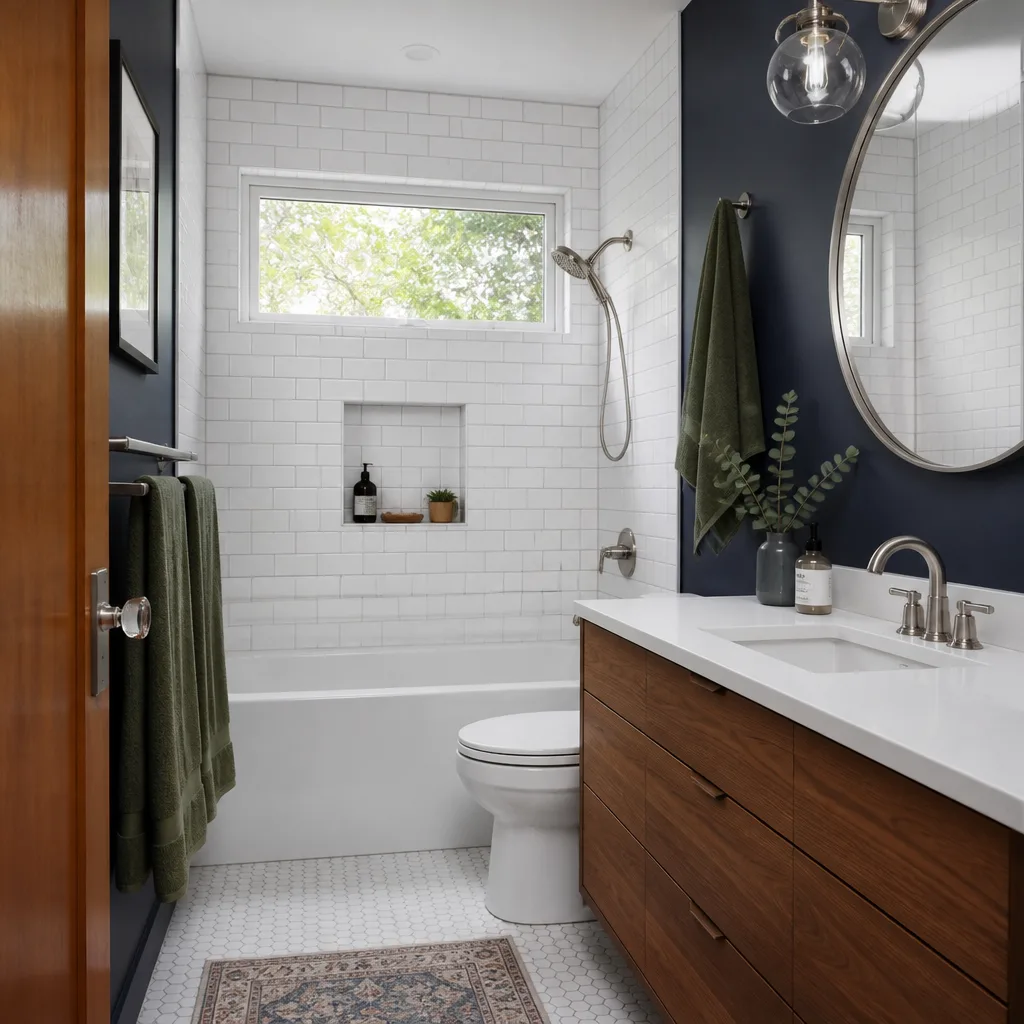
See the difference
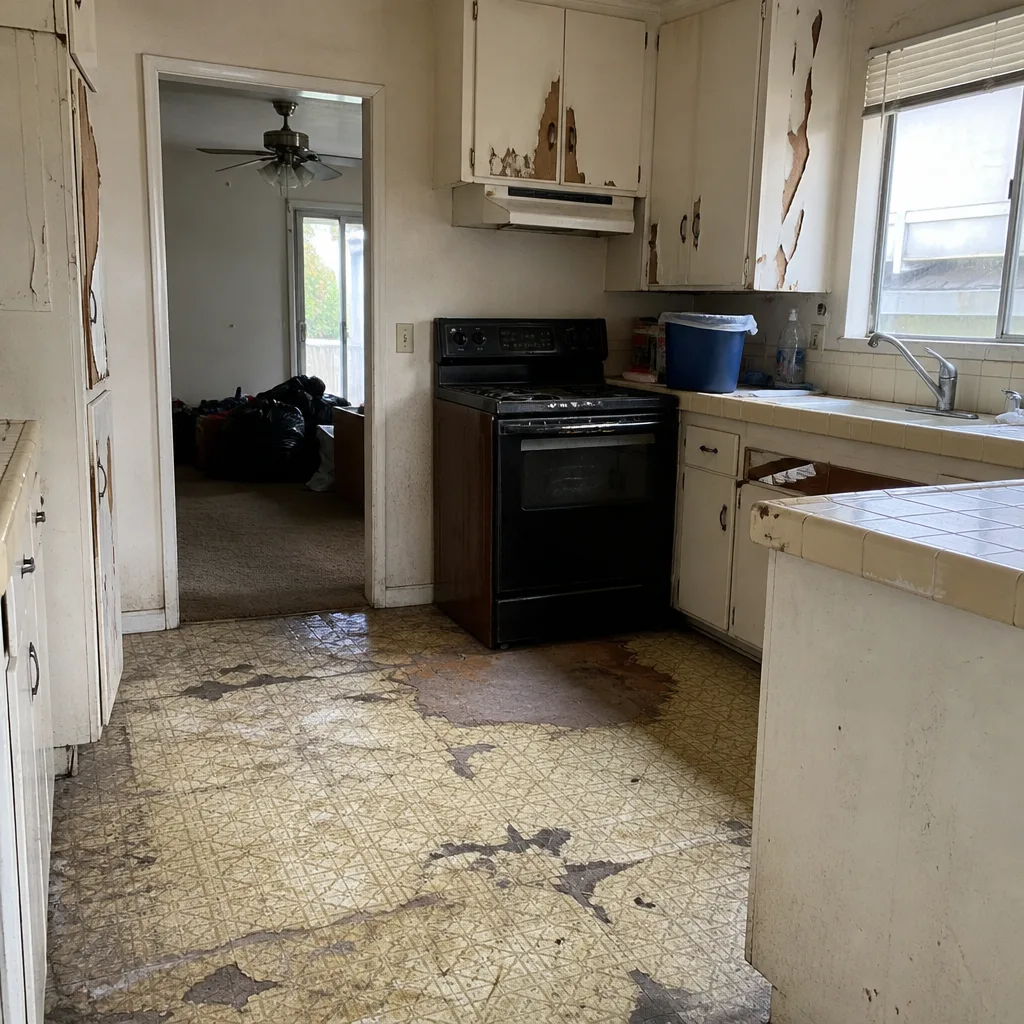 Before
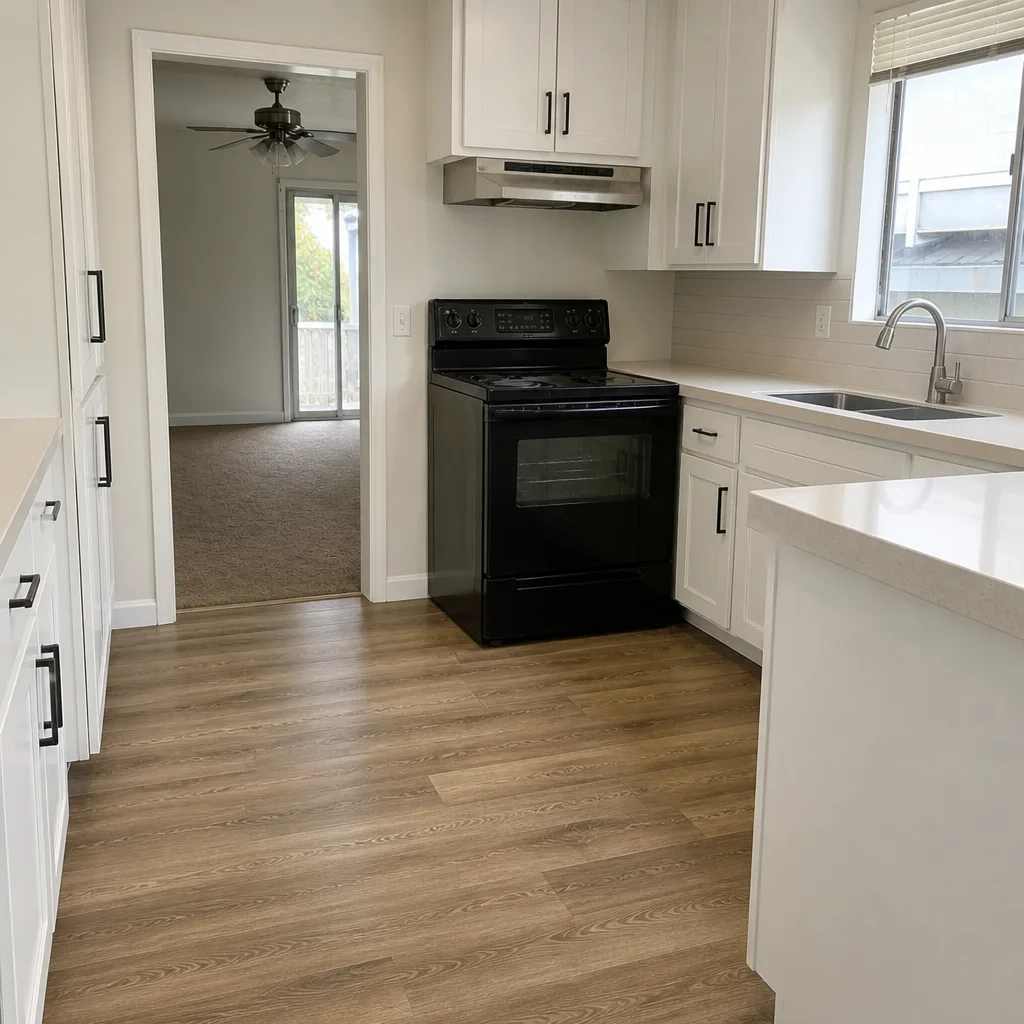 After
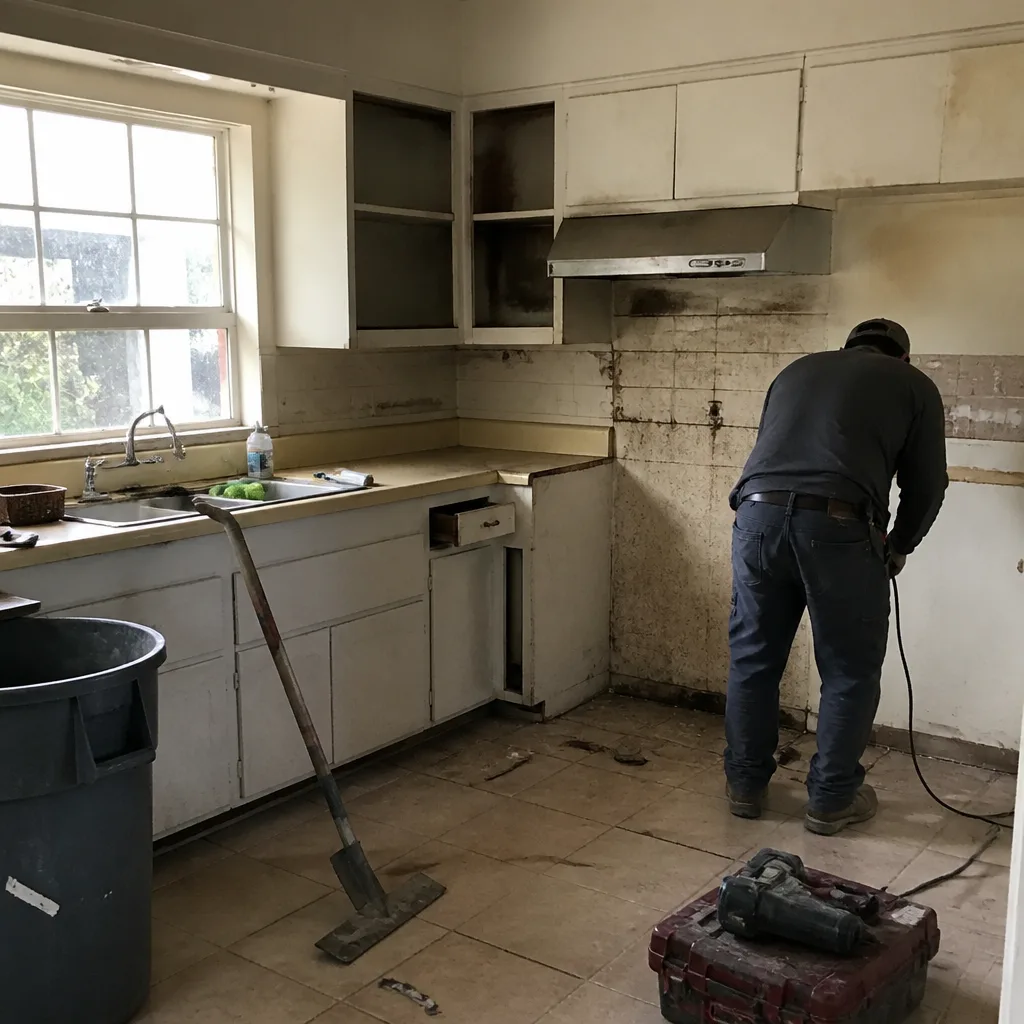 Before
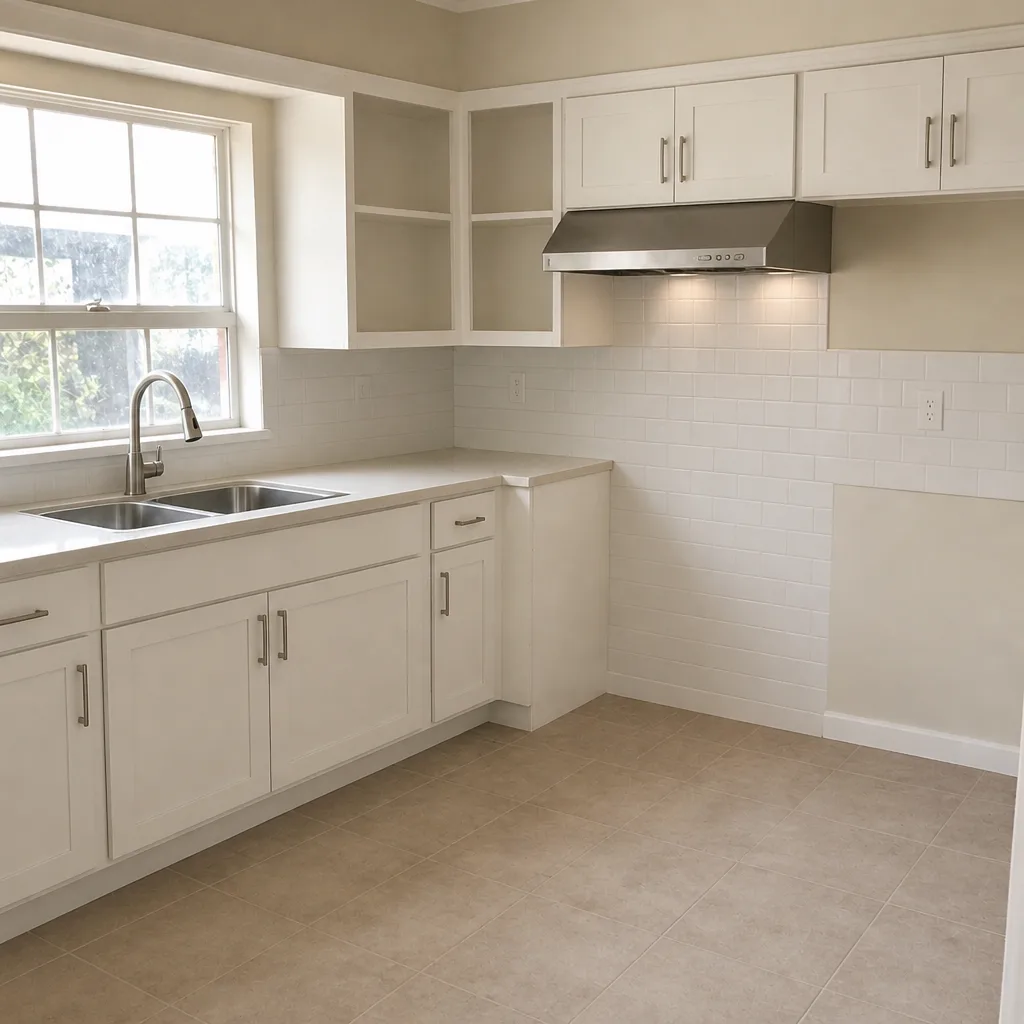 After
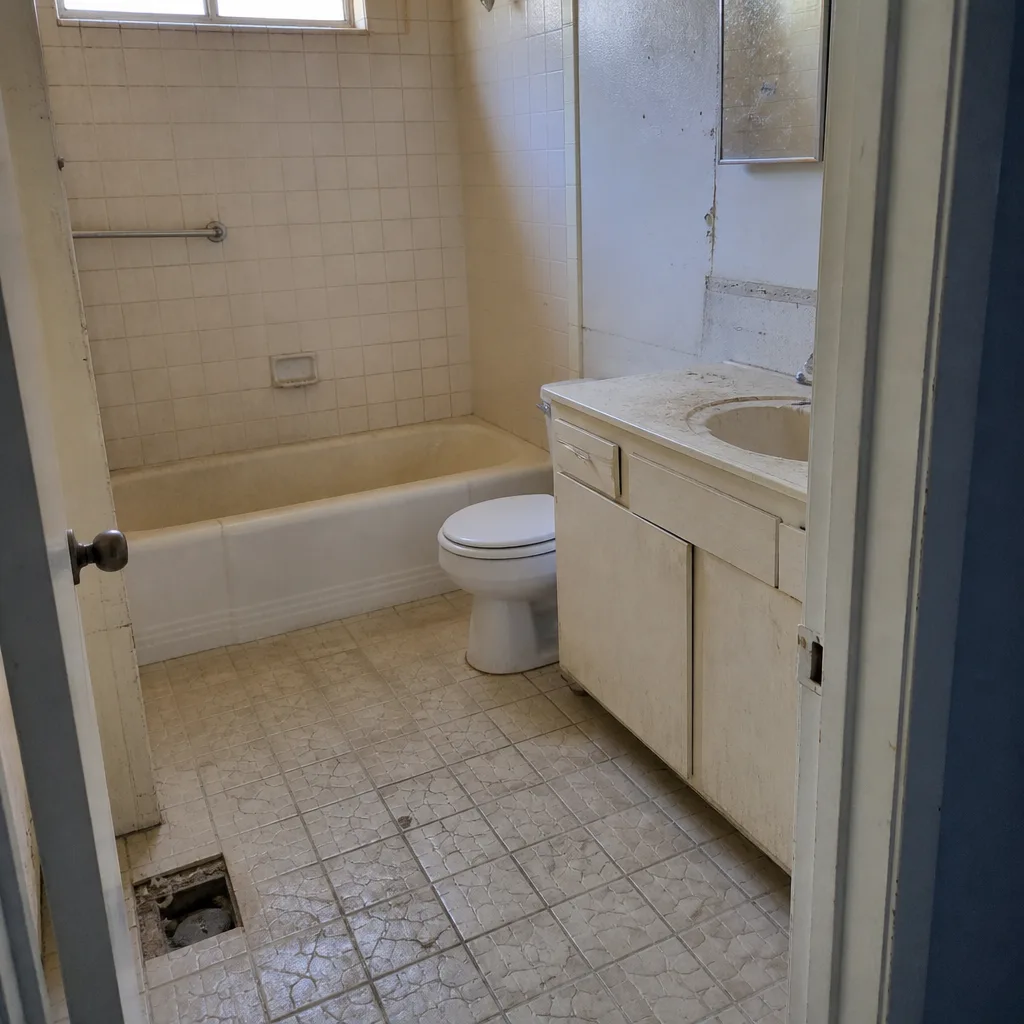 Before
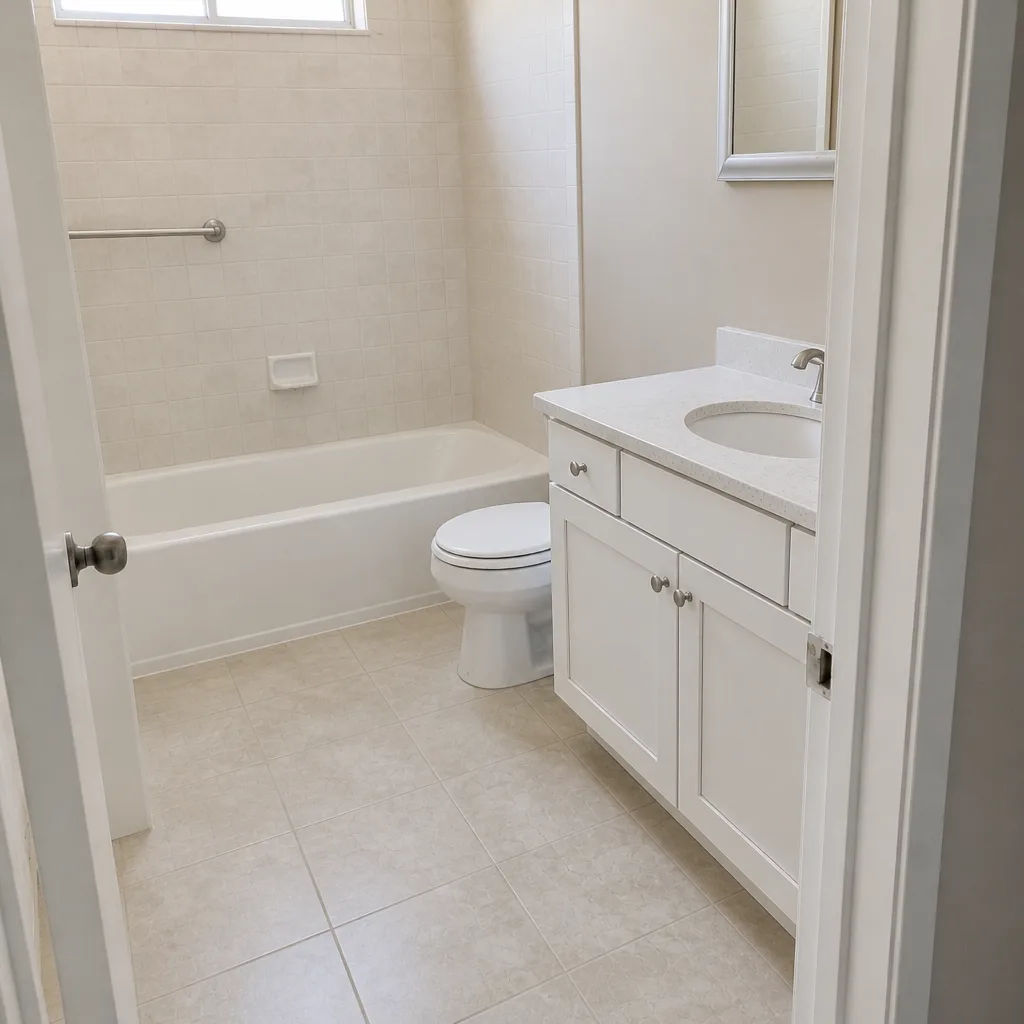 After
The Bottom Line
The DIY vs. professional question in bathroom remodeling isn’t about skill. It’s about permit jurisdiction and the moisture system. Cosmetic work belongs to the homeowner: paint, in-kind swaps, accessories, tile demo, toilet replacement. Permitted work belongs to a licensed contractor, and the line is objective – wet wall, drain, circuit, egress, waterproofing. Crossing that line on a DIY basis doesn’t cost you the day of the work. It costs you at resale, when your buyer’s inspector finds the discrepancy and the disclosure obligation lands. If your project is in Costa Mesa and touches any of those trigger points, call us before you buy a single box of tile.
Get a Free Estimate
If you’ve read this far and your project crosses the permit line, the next step is a straightforward conversation about scope and price. We’ll walk your bathroom, answer the permit question honestly, and hand you a written price before any work starts, backed by the 365-Day Done Right Promise. Calls are answered by a live person, 24 hours a day, seven days a week. Call Bradford Remodeling Co Costa Mesa at (855) 659-2556 to schedule your free estimate.
Written by the team at Bradford Remodeling Co Costa Mesa.