Last updated November 18, 2026

Free written scope consultation - allowances, timeline, and change-order rules on paper before a single trade is scheduled
DIY vs Professional Home Remodeling: What’s Safe to Do Yourself
Here’s the part most DIY guides leave out: in California, unpermitted work discovered during a home sale escrow must be disclosed. If the buyer’s inspector flags it, you either pull a retroactive permit, demolish it, or drop your asking price. Sometimes all three. So the DIY-versus-pro decision isn’t really about whether you can swing a hammer. It’s about permit exposure and resale liability, and those two things cost more than any labor savings. This guide walks through what Costa Mesa actually requires, which tasks are genuinely safe to do yourself, and where the savings disappear.
Quick Answer
Most homeowners can safely handle cosmetic work (painting, flooring, cabinet hardware, finish trim) without a permit. Anything that touches structure, electrical, plumbing, gas, or mechanical requires a permit in Costa Mesa, and unpermitted work can obligate you to tear it out or slash your price at sale. If the job moves a wall, a wire, or a water line, hire a licensed professional.
Styles & brands we work with
- Kitchen remodeling
- Bathroom remodeling
- Home additions & ADU
- Roofing
- Windows & doors
- Driveway & pavers
- Fence
Table of Contents
- The Costa Mesa Permit Map: What Actually Needs a Permit
- What “Trade Scope” Means (and Why It Matters)
- The Insurance Gap Nobody Warns You About
- DIY vs Pro: Where the Labor Savings Get Erased
- Genuinely Safe DIY Tasks in a Remodel
- Resale Liability: The Escrow Problem
- Costa Mesa Climate and What It Does to DIY Work
- Common Mistakes to Avoid
- When to Call a Professional
The Costa Mesa Permit Map: What Actually Needs a Permit
Costa Mesa follows the California Residential Code (CRC) and Title 24 energy standards. The city’s building department publishes a permit guide, but the short version is simpler than most people expect: the trigger isn’t size, it’s what the work touches.
Here’s the split, in plain terms:
- No permit required: Interior and exterior painting, replacing flooring over existing substrate, swapping cabinet hardware, hanging a door, installing finish trim, adding a freestanding shelf.
- Permit required: Moving a single electrical outlet or switch, adding a circuit, replacing a water heater, running new gas line, cutting or moving any wall, changing a window or exterior door size, building a deck, converting a garage, removing or adding a load-bearing post, re-roofing with structural repair.
That middle line catches people. Moving one outlet feels like a weekend chore. It’s a permitted electrical alteration under the CRC, and it needs an inspection. Same for swapping a light fixture that adds a new box in a wall cavity. Costa Mesa inspectors check box fill, grounding, and Title 24 ventilation in kitchens and bathrooms, and a retroactive inspection at resale is more expensive than the original permit.
If your project touches the kitchen or bathroom in a structural way, our kitchen remodeling in Costa Mesa team handles the permit drawings and inspections as part of the scope, so the paper trail is done before demo day.
What “Trade Scope” Means (and Why It Matters)
Trade scope is the legal boundary around who is allowed to do which part of a job. California draws those boundaries by license class: general building (B), electrical (C-10), plumbing (C-36), mechanical (C-20). Each license covers specific work and specific inspections.
Here’s the wrinkle homeowners find confusing. A California homeowner can legally perform work on their own residence without a contractor’s license, including installing a water heater. But Orange County health and safety rules still require the gas connection and venting to be inspected by the local authority having jurisdiction, and most jurisdictions will only sign off on a permitted install performed or verified by a licensed plumber. So you can pull the permit and set the unit, but you can’t self-certify the gas side.
An easy rule for a remodel in Costa Mesa: if the work requires a permit, plan around trade scope from the start. If the work doesn’t require a permit (paint, flooring), you’re in the clear.
- Structural alterations: general contractor with permit
- Any new or moved electrical circuit: licensed electrician
- Water heater, gas line, drain reconfiguration: licensed plumber
- HVAC change-out or duct work: licensed mechanical contractor
- Cosmetic finishes: homeowner is fine
Getting this wrong costs you a failed inspection at minimum, and a retroactive permit plus opened walls at worst.
The Insurance Gap Nobody Warns You About
Homeowner’s insurance policies frequently exclude damage caused by unpermitted structural or electrical work. Read that again. If a DIY electrical run causes a fire in the attic, or a DIY beam fails and sags the roof, the carrier can deny part or all of the claim because the work wasn’t permitted or inspected.
This is the quiet failure mode. Nobody’s walking around sniffing your breaker panel. But when a claim gets filed, the adjuster asks a basic question: was the work permitted and inspected? If the answer is no, you’re arguing with your own policy while the wall is open.
Two things to check before any DIY remodel in Costa Mesa:
- Call your carrier and ask, in writing, whether unpermitted work is excluded from coverage. Get the exclusion clause in an email.
- Ask whether any electrical or structural work requires a licensed trade signature to remain insured.
If the carrier won’t put it in writing, treat that as the answer. The insurance gap is one of the main reasons we walk homeowners through permit scope during the free estimate, so nobody discovers a coverage problem mid-project.
DIY vs Pro: Where the Labor Savings Get Erased
The rule of thumb in a mid-size metro like ours is that labor alone typically runs 40 to 60 percent of a remodel line item. So DIY looks like a big number on paper. Here’s where it isn’t.
- Retroactive permit in Costa Mesa: $300 to $1,200 depending on scope, plus plans and inspection scheduling.
- Unpermitted structural correction: $2,000 to $8,000 in demo and rebuild to get to a permitted condition.
- Water heater callback: $180 to $350 for a licensed plumber to redo gas and venting after an inspection fail.
- Tile and cabinet install redo (accounting for material waste): $1,500 to $4,500 on a midrange kitchen, because tile and cabinetry rarely survive a second install.
- Resale price reduction to cover buyer’s required repairs: commonly 1 to 3 percent of asking price.
On a $20,000 kitchen refresh, painting, flooring, and cabinet hardware are safe DIY and might save $2,000 to $4,000 in labor. That’s real money. Move the electrical or plumbing, though, and one retroactive permit plus one inspection correction eats the entire savings and hands you a disclosure problem on the way out.
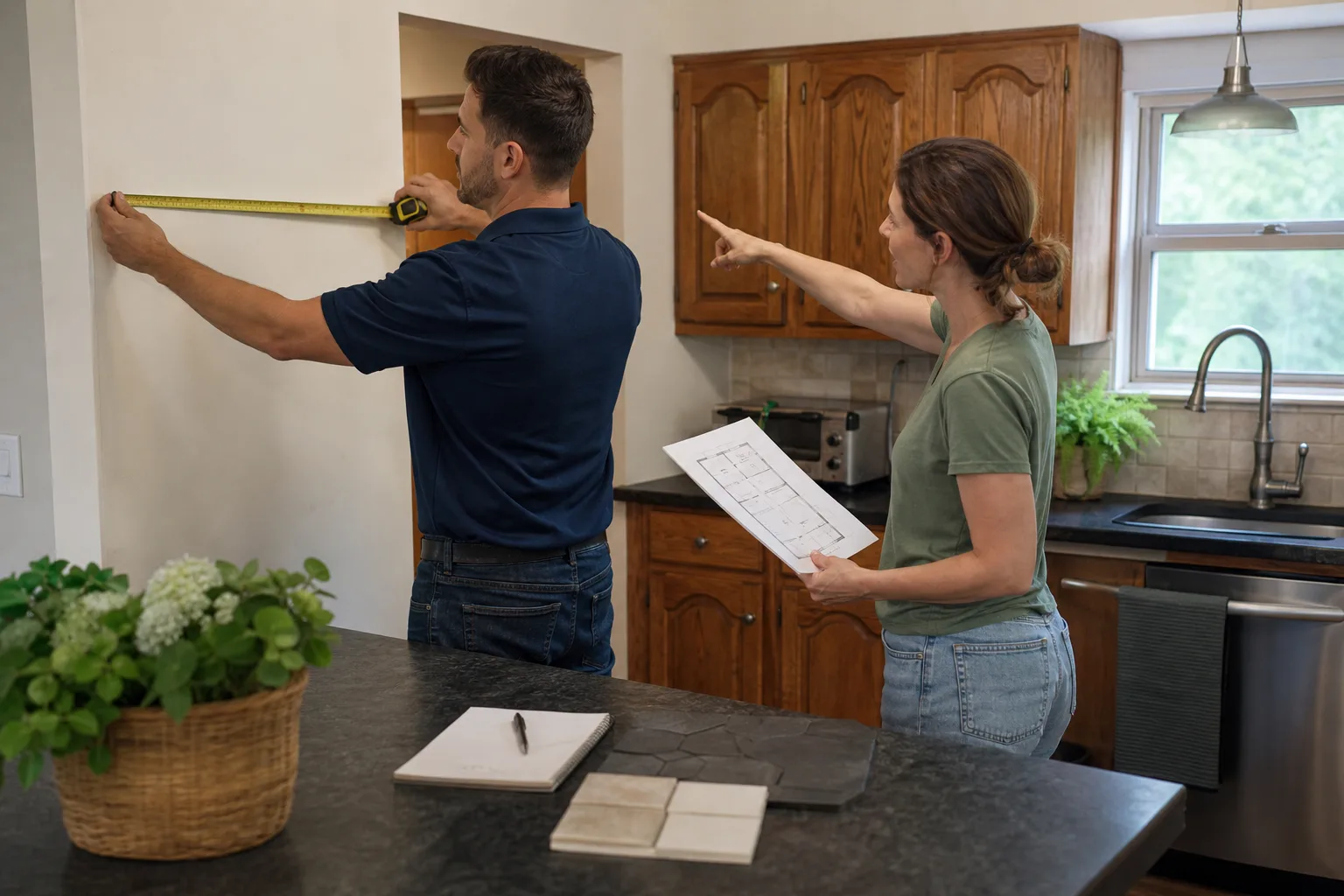
The math usually flips around any permitted work. If the job needs a permit, the labor savings from DIY rarely survive the paper trail. For a full-home scope, our general contractor in Costa Mesa builds the permit and inspection line items into the written price before work starts, so there are no surprise numbers at the door.
Genuinely Safe DIY Tasks in a Remodel
These are the tasks homeowners can take on without creating permit or insurance exposure, assuming you follow the manufacturer’s instructions and use the right tools:
- Demo of non-load-bearing walls. Non-bearing means no structural function. If you’re not sure whether a wall carries load, stop and have it checked. A stud finder and a taped-off drawing don’t tell you what’s inside a wall cavity.
- Interior painting. No permit, no trade scope. Prep and masking matter more than paint brand.
- Flooring install over an existing sound substrate. Luxury vinyl plank and floating laminate are homeowner-friendly. Tile over a failed subfloor is not.
- Cabinet hardware and drawer pulls. Drill template, straight bit, done.
- Finish trim, baseboard, and crown on flat ceilings. Cosmetic, no permit.
What’s not on the list: anything electrical beyond a bulb swap, anything gas, anything that touches the water supply or drain, and anything that changes a wall, window, or door opening.
Two quick safety notes we don’t skip. First, if a wall might be load-bearing, get a professional opinion in writing before demo; the cost of a five-minute consult is a rounding error against a failed beam. Second, gas line work and any work inside the electrical panel are genuinely dangerous and belong with licensed trades. We don’t walk homeowners through either step by step, because that’s not a set of instructions a weekend handyman should get.
For a properly permitted bathroom project, our bathroom remodeling in Costa Mesa team handles rough-in and inspections as part of the scope, which keeps the trades and the paper trail in the same set of hands.
Resale Liability: The Escrow Problem
This is where Costa Mesa DIY projects most often go sideways. California’s transfer disclosure statement (TDS) legally obligates a seller to disclose known unpermitted work. The buyer’s inspector is going to catch it anyway, because inspectors in this market are trained to compare the county assessor’s records and permitted square footage against what’s actually standing.
When the flag comes up, the seller has roughly three paths:
- Pull a retroactive permit. The city inspects and either approves or requires corrections. Corrections often mean opening walls.
- Demolish and restore to the last permitted condition, at the seller’s cost.
- Reduce the asking price to cover the buyer’s perceived risk, and hope the deal closes.
Path one is usually cheapest, and it’s the only path that actually clears the record. But it’s still more expensive than having pulled the permit in the first place, and it delays escrow. If you’ve ever watched a Costa Mesa closing slip a month because of an unpermitted outlet or an unpermitted post, you understand the real cost of DIY outside permit scope.
Any permitted remodel should close with a clean paper trail: signed-off inspection cards, a written scope, and a written guarantee in the homeowner’s hand. That’s what “squared away” means at job close, and it’s the framework behind The Garrison Standard we operate under.
Costa Mesa Climate and What It Does to DIY Work
Costa Mesa’s coastal marine layer and mild humidity affect finishes more than most homeowners expect. The inland side of town toward the 55 freeway runs hotter and drier than the Westside neighborhoods near 17th Street, and that difference matters for paint, cabinet install, and tile.
- Paint: In spring and early summer, the marine layer holds moisture on exterior surfaces into mid-morning. Exterior paint applied too early traps moisture and fails in a year. Interior paint in a sealed room needs ventilation, not a morning fog window.
- Tile: Thinset and grout cure on a schedule. Coastal humidity in Westside homes slows the cure and can leave grout discolored if you’re walking on it too soon. Add a day.
- Cabinetry: Solid-wood cabinetry, whether it’s KraftMaid or Welborn, expands and contracts with humidity. In Costa Mesa, install in the drier months where you can, and let finished cabinets acclimate in the room for a few days before install. Skipping acclimation is one of the main causes of door bind two months after install.
- Exterior trim: James Hardie fiber cement and Therma-Tru exterior doors both want to be installed in dry weather, with the manufacturer’s sealing and flashing details followed. Coastal wind-driven moisture will find the seam you skipped.
Costa Mesa homes also sit in a mix of older post-war tracts and mid-2000s rebuilds. Older stock has more varied framing and more likely has prior unpermitted modifications lurking. That’s a good reason to check permit history on any home before buying or remodeling. The city building department can pull the record; it’s a five-minute ask that saves a five-figure surprise.
Common Mistakes to Avoid
- Moving an outlet “just a few feet” without a permit. It’s a permitted alteration in Costa Mesa. Small scope, real paper trail.
- Trusting a stud finder or a taped line to tell you a wall is non-bearing. Neither tells you what’s inside. Have it checked before demo.
- Self-installing a water heater and assuming the inspection will pass. Gas and venting require licensed verification in most Orange County jurisdictions.
- Skipping the carrier conversation on unpermitted work exclusions. The exclusion clause is where claims actually die.
- Buying cabinet hardware or fixtures without checking the spec sheet. A Kohler or Moen faucet installs in under an hour when the rough-in is right and turns into a return trip when it isn’t.
- Starting tile before the subfloor is verified flat. Tile over a deflecting subfloor cracks at the grout line within months. Costa Mesa homes with wood subfloors over crawl space need a floor flatness check first.
- Not booking inspections early. Costa Mesa building department appointment slots fill. Schedule inspections the same week you file the permit, not the week the work is done.
When to Call a Professional
Call a professional the moment the scope touches structure, electrical, plumbing, gas, or HVAC, and any time a wall, window, or door opening changes. Call when you’re unsure whether a wall carries load (that uncertainty is the whole answer). Call when the project lives in a room with a wet wall, which is almost every kitchen and bathroom in a Costa Mesa home. Call when you’re selling within a year, because retroactive permit costs are higher than the original permit. And call if you’ve already started and hit a load-bearing wall, a failing subfloor, or a permit question you can’t answer.
Bradford Remodeling Co Costa Mesa offers free estimates in Costa Mesa, with a written price before any work starts and a 365-Day Done Right Promise on every completed project. Call (855) 659-2556 to schedule yours. A live person answers, day or night.
Frequently Asked Questions
It depends on what the remodel touches. Cosmetic changes like painting, cabinet refacing, hardware, and flooring typically don’t require a permit. Any electrical, plumbing, gas, or structural change does, and most meaningful kitchen remodels touch at least one. The permit scope matches the trade scope, not the square footage. Call (855) 659-2556 to talk through your scope, and we’ll tell you which line items need a permit before you do anything.
No, not in Costa Mesa. Relocating an outlet or switch is a permitted electrical alteration under the California Residential Code, and it requires an inspection. The work itself is small. The permit and inspection are not optional. Call (855) 659-2556 if you want the electrical scope handled inside a larger project, so the inspection schedule is coordinated with the rest of the trades.
You must disclose it on the transfer disclosure statement, and the buyer’s inspector is likely to catch it. You’ll be choosing between pulling a retroactive permit, demolishing and restoring to permitted condition, or reducing the price. All three cost more than the permit would have. Call (855) 659-2556 before you list, and we can scope the correction while escrow is still negotiable.
A California homeowner can perform work on their own residence without a contractor’s license, so installing a water heater is legal for you. But gas connection and venting must be inspected, and most Orange County jurisdictions require licensed verification of the gas side. You can pull the permit and set the unit, but you can’t self-certify the gas work. Call (855) 659-2556 to have the install and inspection handled together.
It can. Many policies exclude damage caused by unpermitted structural or electrical work, and the adjuster will ask whether the work was permitted and inspected. Ask your carrier for the exclusion clause in writing before you DIY anything in a permitted scope. If you want the scope built permit-first so there’s no exposure, call (855) 659-2556 for a free estimate.
Retroactive permits in Costa Mesa typically run $300 to $1,200 depending on scope, before any correction work. If walls have to be opened to inspect framing or electrical, plan on $2,000 to $8,000 in reconstruction on top. The written price we give you covers the permit line item and the inspection from the start, so there are no retroactive surprises. Call (855) 659-2556 for an exact quote.
See the difference
 Before
 After
 Before
 After
 Before
 After
The Bottom Line
The DIY-versus-pro question isn’t about skill. It’s about paper trail. Painting, flooring, cabinet hardware, and finish trim are genuinely safe to do yourself and can save real money. Anything that touches structure, electrical, plumbing, gas, or mechanical triggers a permit in Costa Mesa, and the savings get eaten by retroactive permits, callback costs, and resale liability the moment you skip one. If you want to know exactly where your scope sits, our remodeling team serving Costa Mesa will walk you through it at the free estimate: written price before any work starts, permits and inspections handled, and the 365-Day Done Right Promise on every finished project.
Frequently Asked Questions About DIY and Permits
If you’re weighing a DIY project and want a straight answer on permit scope before you start, that’s the right time to call, not after demo. Bradford Remodeling Co Costa Mesa offers free estimates in Costa Mesa. Call (855) 659-2556 to schedule yours. Every price is written before any work starts, no numbers move at the door, and every completed project carries the 365-Day Done Right Promise in writing. A live person answers the phone 24 hours a day, 7 days a week, so you’re not leaving a voicemail and waiting for a callback that doesn’t come.
Written by the team at Bradford Remodeling Co Costa Mesa.