Last updated November 18, 2026

Free written scope consultation - allowances, timeline, and change-order rules on paper before a single trade is scheduled
DIY vs Professional Kitchen Remodeling: What’s Safe to Do Yourself
A California homeowner can legally serve as their own general contractor on a kitchen remodel. The permit application even has a checkbox for it. But the moment that box is checked, the homeowner becomes the contractor of record – and loses the single most valuable protection in construction: the ability to file a complaint with the Contractors State License Board against the person who installed the crooked cabinet or the leaking drain. There’s no licensed general contractor left to hold responsible. In our experience across Costa Mesa, that trade-off catches people off guard. This guide draws the line clearly: what’s safe to do, what isn’t, and where the permit makes the decision for you.
Quick Answer
Safe DIY kitchen work: painting, cabinet hardware swaps, replacing a light fixture on an existing circuit, and swapping a faucet. Everything behind the wall or under the permit – electrical rough-in, plumbing relocation, gas lines, structural changes, cabinet installation with countertop templating – belongs to a licensed trade. In California, pulling your own owner-builder permit makes you legally responsible for every subcontractor’s defects, so the savings on permit fees rarely outweigh the liability you take on.
Styles & brands we work with
- Kitchen remodeling
- Bathroom remodeling
- Home additions & ADU
- Roofing
- Windows & doors
- Driveway & pavers
- Fence
Table of Contents
- What “Owner-Builder” Actually Means on a California Permit
- What’s Genuinely Safe to Do Yourself in a Kitchen
- Where DIY Creates Compounding Risk
- The Hybrid Model: Homeowner Demo, Licensed Trades Finish
- How Inspections Work When You Self-Perform Part of the Job
- The Real Labor Cost Breakdown of a Kitchen Remodel
- Costa Mesa-Specific Considerations
What “Owner-Builder” Actually Means on a California Permit
An owner-builder permit is a legal declaration that you, the property owner, are performing or directly supervising the work yourself. California’s Business and Professions Code allows it for owner-occupied residences. What most homeowners don’t read closely is the disclosure they sign alongside it – the one that says if they hire unlicensed workers or subs, they become the “employer” for workers’ compensation and liability purposes, and the one that restricts them from selling or leasing the home within one year of the completed work unless they disclose the owner-builder nature of the construction to the buyer in writing.
That second clause is where the economics shift. If there’s any chance you’ll sell within 12 months – a job change, a growing family, an unexpected move – you’ll need to disclose to the buyer that the kitchen was owner-built, which can trigger buyer requests for a licensed contractor’s inspection or a credit at close. The one-year rule isn’t a technicality; it’s the state telling you it treats owner-builder work as riskier than contractor-pulled work.
The other clause people miss: the CSLB complaint process. When a licensed general contractor pulls a permit and something fails, the homeowner has a formal, state-run method of complaint, arbitration, and in some cases recovery from the CSLB’s judgment fund. When you pull the permit yourself and hire a licensed electrician as your sub, and that electrician walks off mid-job or installs something that fails inspection, your recourse is civil court, not the licensing board. There’s no contractor of record above the sub to hold accountable.
If you want to understand what a properly permitted and inspected kitchen remodel looks like end to end, our Kitchen Remodeling in Costa Mesa page walks through the scope and sequencing in plain language.
What’s Genuinely Safe to Do Yourself in a Kitchen
These tasks save real money, carry no permit requirement, and don’t put you on the hook for anything if they go wrong. They’re also the tasks a contractor might charge $800 to $2,000 for as a bundle, so the sweat equity here isn’t tiny.
- Painting cabinets and walls. On a typical 10-by-12 kitchen, cabinet painting runs $1,200 to $2,400 in the contractor’s quote. Doing it yourself costs $150 to $300 in paint and primer. The catch is prep – deglossing, sanding, and priming is 80% of the result, and rushed prep peels within 6 to 12 months.
- Swapping cabinet hardware. Pulls and knobs are the cheapest visible change in the room. If you’re changing pull spacing from 3-inch to 5-inch centers, you’ll drill new holes and need to fill the old ones with wood putty – but it’s a two-hour job, not a subcontractor call.
- Replacing a light fixture on an existing circuit. If the existing box and wire are already there and you’re swapping a fixture of similar weight, this is a homeowner-legal task in California. No new circuit, no new box location, no permit.
- Swapping a faucet. Removing the old faucet and threading the supply lines onto a new one – on an existing shut-off valve and existing drain – is straightforward. It becomes permit-and-licensed work the moment you touch the drain line, add a new shut-off, or relocate plumbing.
What all four of these have in common: they don’t touch anything behind the wall, and they don’t require an inspection to sign off on the work.
Where DIY Creates Compounding Risk
Three specific mistakes we see repeatedly in Costa Mesa homes, all of them repairable but all of them costing more to fix than the initial job would have cost to hire out.
Tile over tile over subfloor. It sounds like a shortcut: skip the demo, thinset the new tile straight onto the old. It works for a few years. Then the added dead load – roughly 4 to 6 pounds per square foot on top of the existing floor – starts to show at floor transitions. In older Costa Mesa kitchens where the subfloor is 5/8-inch plywood over 2×10 joists, we’ve seen grout crack lines appear along joist lines within 18 months. The fix is tearing out both layers, which is twice the demo cost of the original job.
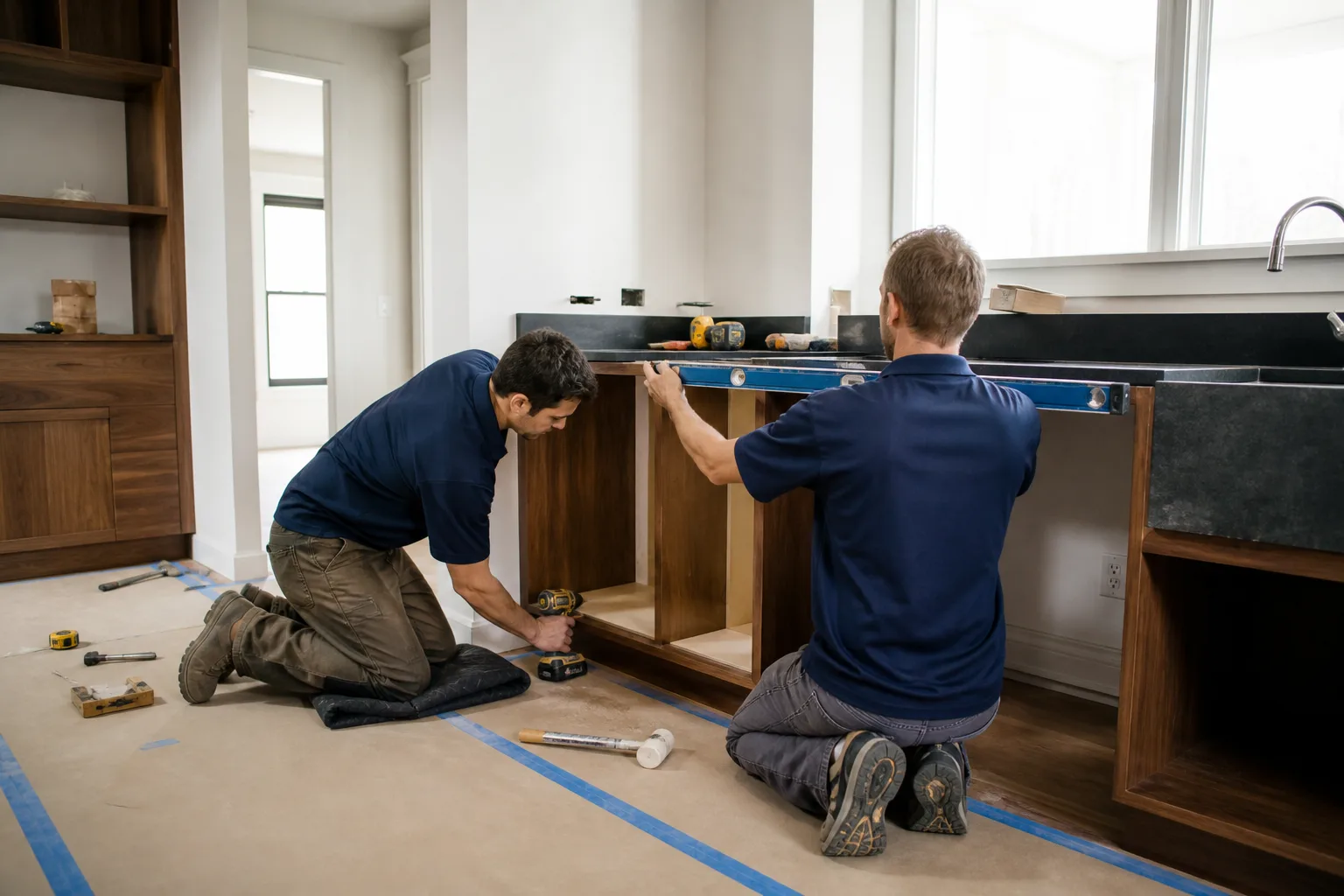
Cabinet shimming that causes countertop seam failure. Base cabinets have to be shimmed dead level across the whole run, not just level at each individual cabinet. When a shim error is more than 1/8 inch over a 6-foot run, the countertop templater measures off the high point, the slab gets cut flat, and the seam between two slabs can’t close. A stone countertop fabricator will re-templating charge $600 to $1,200 to redo the piece, and the cabinets still have to be corrected. That’s a $2,000 mistake that a $400 cabinet-set labor charge would have avoided.
Improper vent fan termination. A DIY-vented range hood that dumps into the attic instead of through the roof creates moisture and grease buildup. In Costa Mesa’s humid coastal air (average year-round relative humidity around 65%), that moisture condenses on framing in the attic within a single cool season. Roof sheathing delaminates, and the fix runs from $1,500 to $3,500 depending on how much sheathing needs replacement. Recenter your vent stack or move the fan termination outside a licensed roofer’s scope and it becomes the same problem again.
All three are the kind of thing the owner-builder exception doesn’t protect you from – because there’s no contractor of record to inspect the mistake before it’s buried.
The Hybrid Model: Homeowner Demo, Licensed Trades Finish
The smartest way to capture DIY savings without taking on owner-builder liability is to split the job at the wall line. The homeowner handles demo, hauling, and painting on their own schedule with no permit. A licensed general contractor pulls the permit, handles rough-in, cabinet and countertop installation, final plumbing and electrical, and the inspection walkthrough.
- Homeowner pre-demo: remove upper and lower cabinets, countertop, appliances, backsplash, and flooring. This is the single biggest labor line you can absorb – typically $1,800 to $3,500 of a Costa Mesa kitchen remodel.
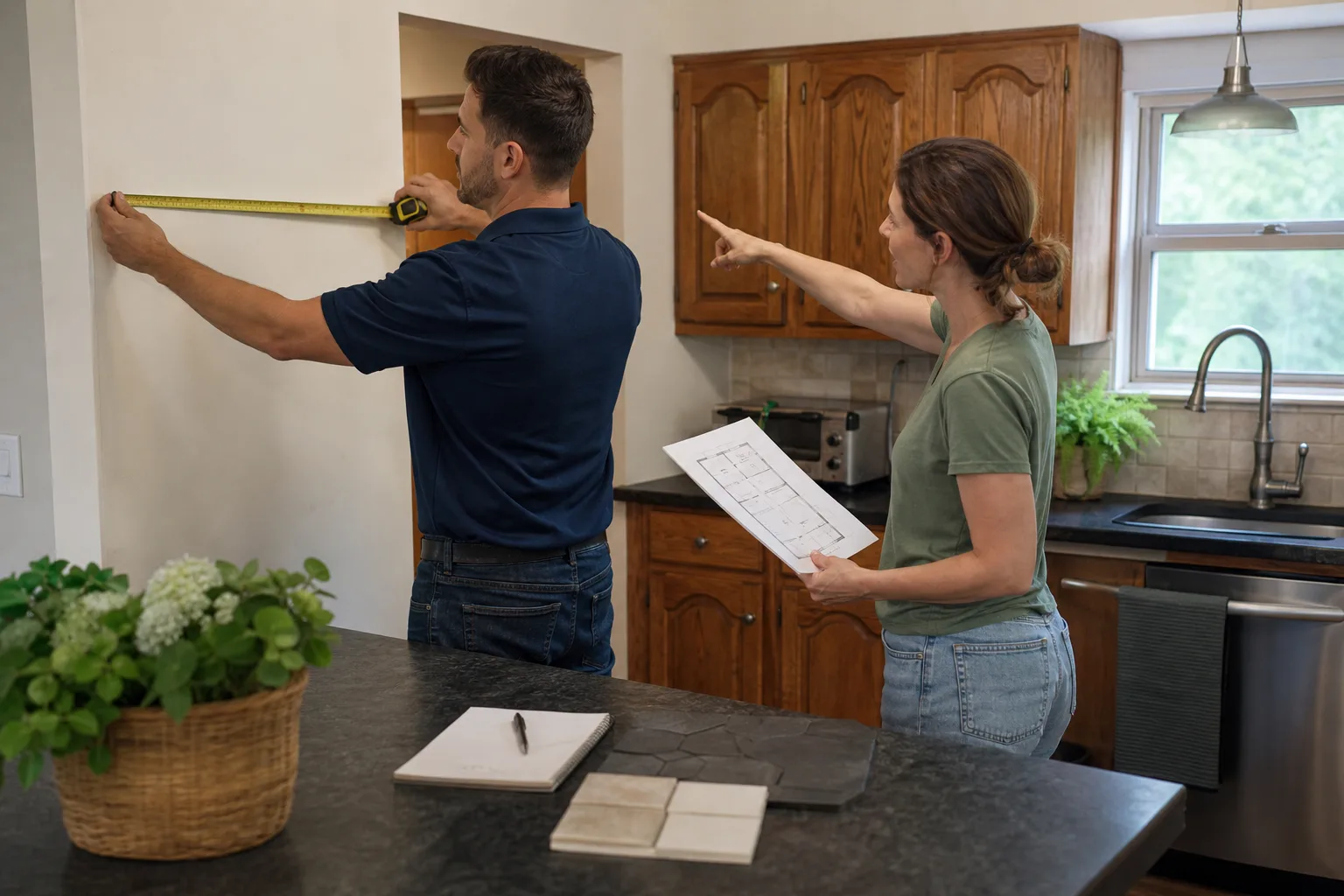
- Contractor site walkthrough: verify what was behind the walls – water damage, mold, out-of-code wiring, or bad framing that needs correction before rough-in – and get a written scope for any surprises before proceeding.
- Contractor pulls permit: permit application, plan review if required, and scheduling of the rough-in inspection (electrical and plumbing rough) and the final inspection.
- Rough-in by licensed trades: electrician, plumber, and HVAC if the range hood or ducting changes.
- Rough-in inspection passes: this is the checkpoint. Cabinets don’t get installed until the rough-in inspection is signed off by the inspector, because corrections after cabinets go in cost 3 to 4 times more.
- Install: cabinets, countertop template and install, tile, appliance hookups, final electrical and plumbing trim.
- Final inspection: the inspector signs off on the completed scope, and the homeowner gets a documented, permitted, inspected kitchen.
The trade-off: you’ll pay for a general contractor’s oversight on the licensed trades instead of paying a GC for demo, which is the trade most homeowners want to make. The value of an experienced crew here is coordination – keeping the electrician, plumber, cabinet installer, and countertop templater on the same schedule so the job doesn’t sit idle for two weeks between rough-in and finish.
How Inspections Work When You Self-Perform Part of the Job
Inspection scheduling depends on who pulled the permit. If the homeowner pulled an owner-builder permit, the homeowner is responsible for calling in inspections – and the inspector will expect the person on site to speak to the work. When a sub-trade fails rough-in and the inspector red-tags it, the homeowner has to schedule the correction, which means coordinating the sub, rescheduling the inspector, and eating the delay. We’ve watched owner-builder kitchens in Costa Mesa sit four to six weeks between failed rough-in and re-inspection because the homeowner was waiting on a sub’s callback.
When a licensed general contractor pulls the permit, the GC calls in and attends every inspection. Corrections are the GC’s problem – which is what a “done right” guarantee actually means in practice. On a project we manage, if rough-in fails, the crew is back the next scheduled day, not waiting on a callback queue.
There’s a second layer here that most DIY guides ignore: California requires the final inspection before the space is legally occupied as a kitchen. Selling or refinancing a home with unpermitted kitchen work is where this becomes expensive – lenders and buyers ask for the permit history on the property, and an unpermitted kitchen remodel often shows up as a red flag on a title disclosure. The cost of pulling the permit correctly (typically $400 to $1,200 for a residential kitchen remodel in Costa Mesa, plus a small plan-check fee if structural walls are involved) is minor against the cost of a re-inspection or a buyer’s credit at close.
The Real Labor Cost Breakdown of a Kitchen Remodel
Pricing out line items is the single most useful exercise for deciding what to DIY. Here’s how a typical 200-square-foot kitchen remodel in Costa Mesa breaks down – these are the numbers you’ll see from licensed contractors, not the DIY materials cost.
- Design and permitting: $2,500 to $6,000
- Demo and hauling: $1,800 to $3,500
- Cabinetry installation (base and wall, including shimming and toe kick): $2,200 to $4,200
- Countertop fabrication and install (quartz, Cambria or Caesarstone range): $3,000 to $6,500
- Electrical rough-in, trim, and panel work if needed: $2,000 to $5,500
- Plumbing rough-in and trim (sink, drain, and possibly relocating a supply): $1,800 to $4,000
- Tile backsplash installation: $1,200 to $2,800
- Flooring installation: $1,800 to $4,500
- Painting (walls and ceiling): $800 to $1,800
- Appliance hookups and final trim: $600 to $1,200
The DIY-absorbable lines total about $4,400 to $8,800 – more if you handle painting yourselves. The lines worth paying for are the cabinetry install and countertop template seam (both of which are the most common DIY tripwires), the electrical and plumbing rough-in (permit-mandated), and the tile work (which is cosmetic, not structural, but shows every mistake).
If you’re trying to size a full-floor remodel alongside the kitchen, our General Contractor in Costa Mesa page covers how scopes are sequenced across multiple rooms. The same logic for Bathroom Remodeling in Costa Mesa applies – tile and plumbing are the wrong trades to DIY, and finish work is the right one.
Costa Mesa-Specific Considerations
Costa Mesa sits on coastal marine air with a cool, damp season that runs longer than most of Orange County’s inland cities. That matters for kitchen work in two specific ways: paint cure times run longer than the labels claim (a cabinet paint that cures in 7 days inland often needs 10 to 14 here before it’s fully hard), and any moisture introduced into the framing – which happens during a wet winter on an open-wall remodel – needs to dry completely before drywall or cabinets go back on. We schedule rough-in and drywall around the marine layer, not the calendar month.
Permitting in Costa Mesa runs through the city’s Building Division, and a kitchen remodel that moves a wall, adds a window (ES Windows and ECO Window Systems are two of the more common brands on Costa Mesa kitchen jobs), or changes the structural footprint will need plan review, not just an over-the-counter permit. Over-the-counter permits (cabinet swap, faucet replacement, electrical fixture swap) turn around in about a week. Plan-reviewed permits for a wall change run three to six weeks in our experience. If you’re doing the work yourself, that timeline is on your calendar – there’s no contractor riding the process for you.
For a wider view of how the trades sequence in this market, our Bradford Remodeling Co Costa Mesa home page lays out the approach across all our work.
Common Mistakes to Avoid
- Pulling an owner-builder permit when you plan to hire any subs. The moment an unlicensed worker touches the job under your permit, you become the “employer” for workers’ comp and liability. Hiring licensed subs makes you a GC in the eyes of the state but without the licensing protection.
- Demoing before the design is settled. Pulling cabinets before you’ve confirmed whether the plumbing or gas line moves means you’re tearing out twice. In Costa Mesa kitchens with the original 1960s plumbing, we’ve seen demo expose a moved drain line and force a re-permit.
- Skipping the rough-in inspection before cabinets are set. Cabinets installed before rough-in sign-off are the most expensive correction line on the job – walls come back open, cabinets come back off, and both trades reschedule.
- Painting cabinets yourself in the colder months without allowing extra cure time. Costa Mesa’s cool coastal air extends cure by 3 to 5 days. Doors reinstalled before full cure show fingerprints and scratches within weeks.
- Tiling over an existing tile floor to save demo time. The added load and the double-layer height at door transitions causes trim failures and grout cracking, especially on the older wood-framed floors common in central Costa Mesa.
- Assuming “the inspector will catch it.” Inspections sign off on what’s visible and code-compliant at each stage – they don’t catch a shimming error that only shows when the countertop is templated, or a range hood vented into the attic.
- Forgetting the one-year owner-builder resale disclosure. If you sell or lease within 12 months of completion, you must disclose the owner-builder nature of the work to the buyer in writing. Buyers routinely request a licensed contractor’s inspection and negotiate a credit.
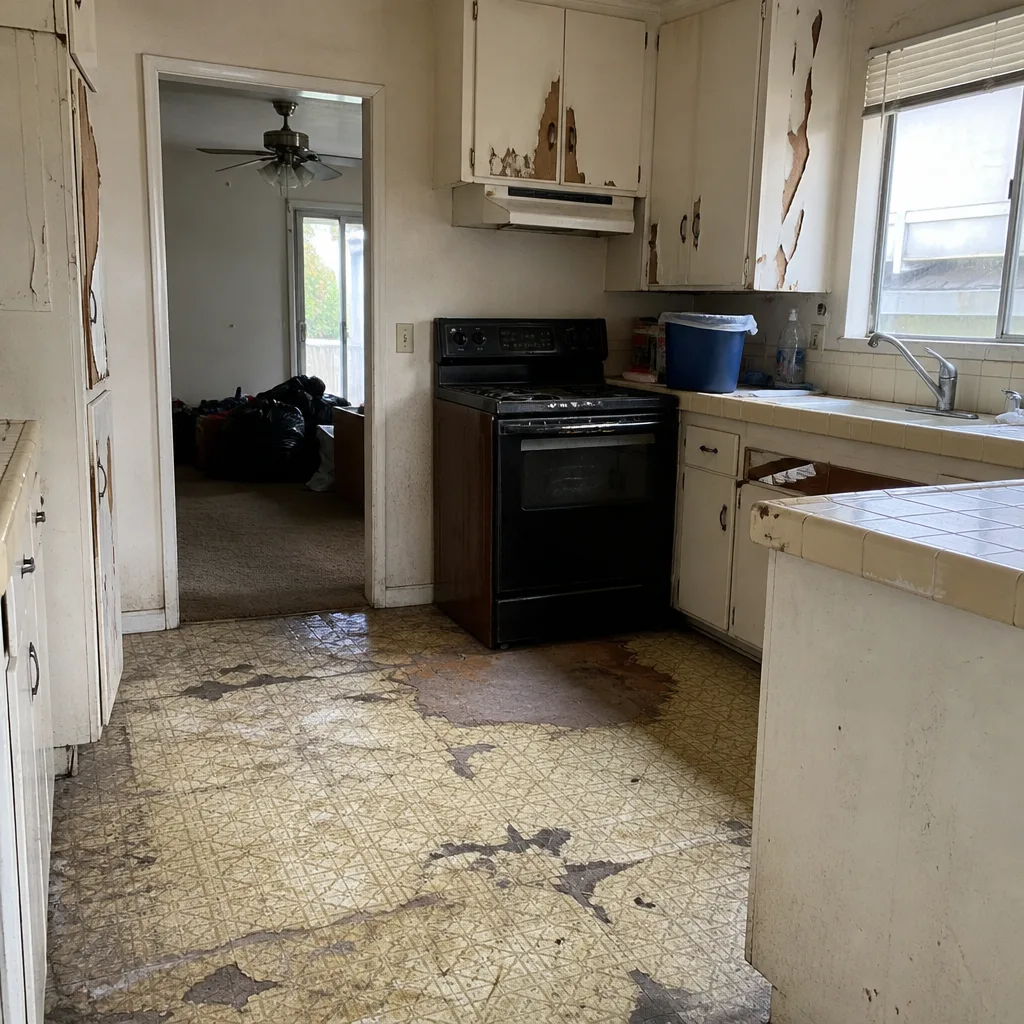
See the difference
 Before
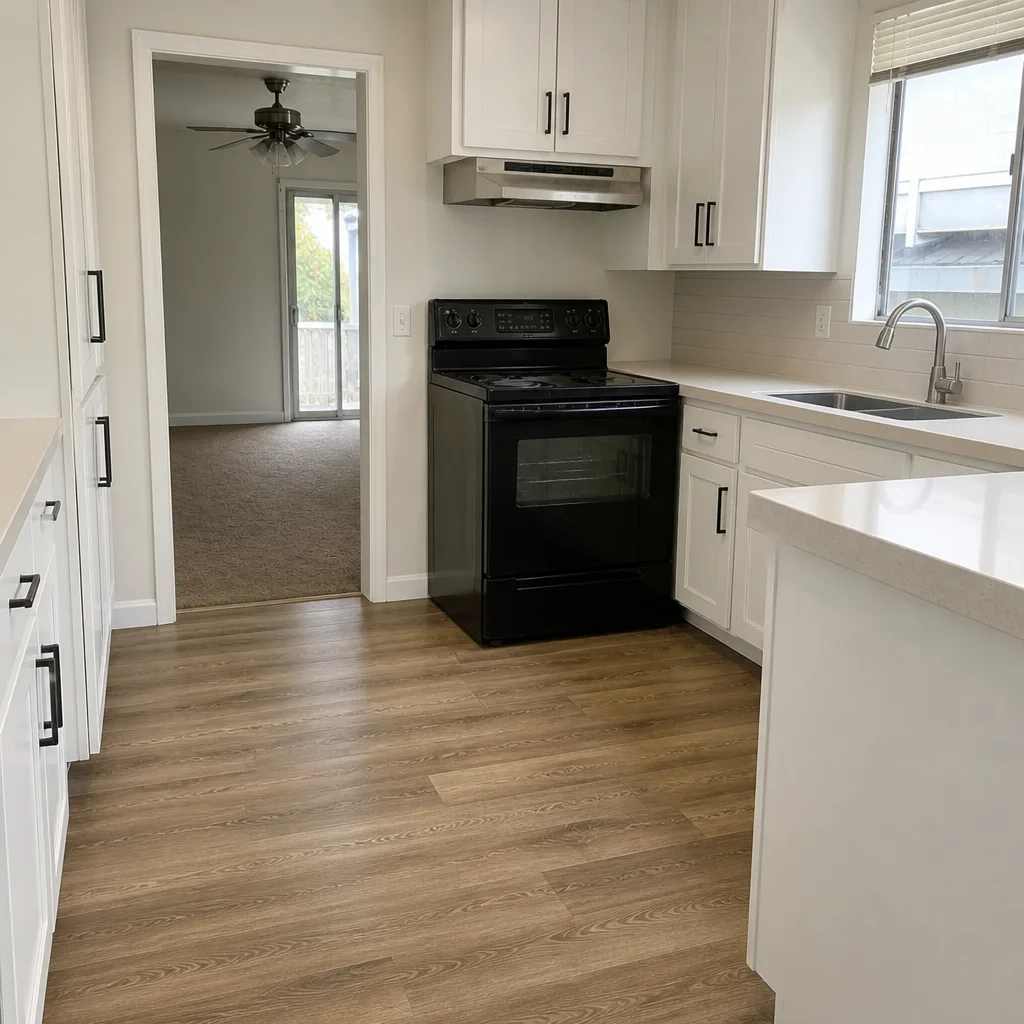 After
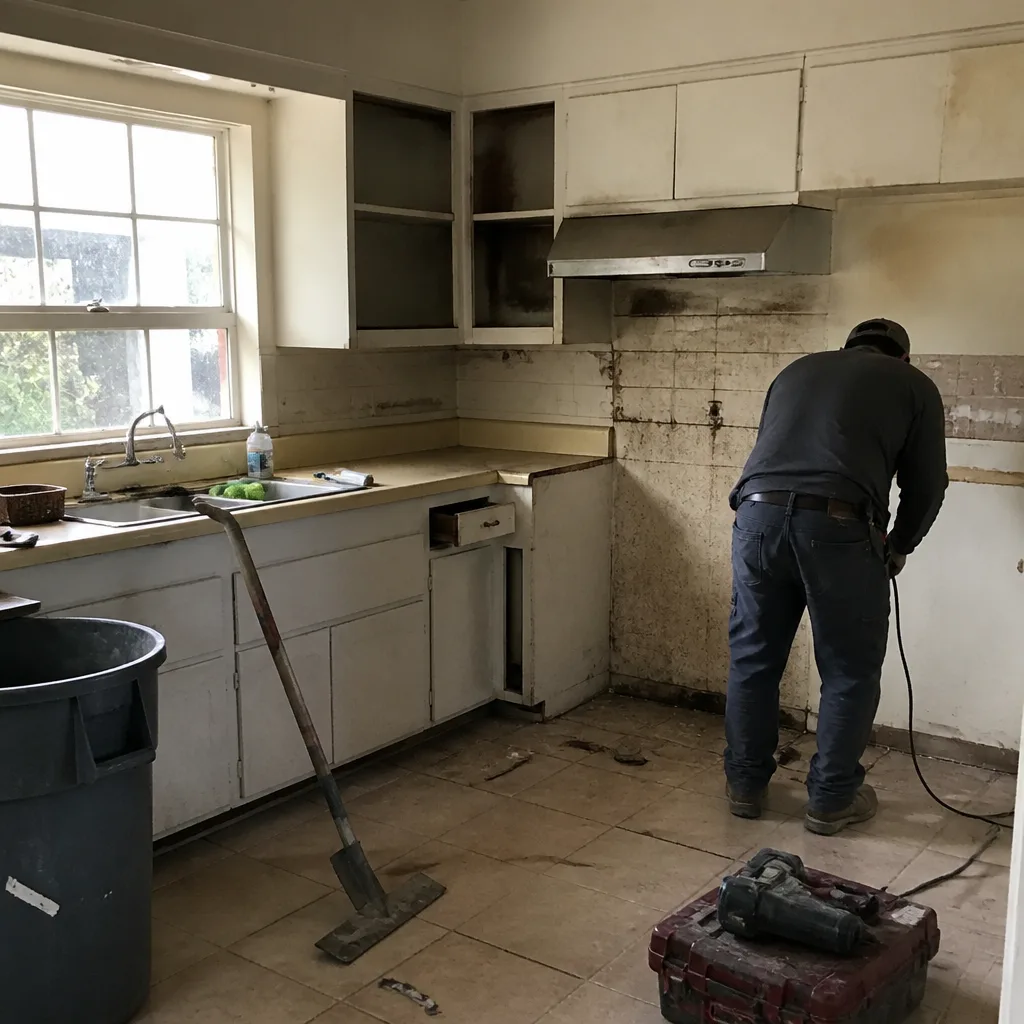 Before
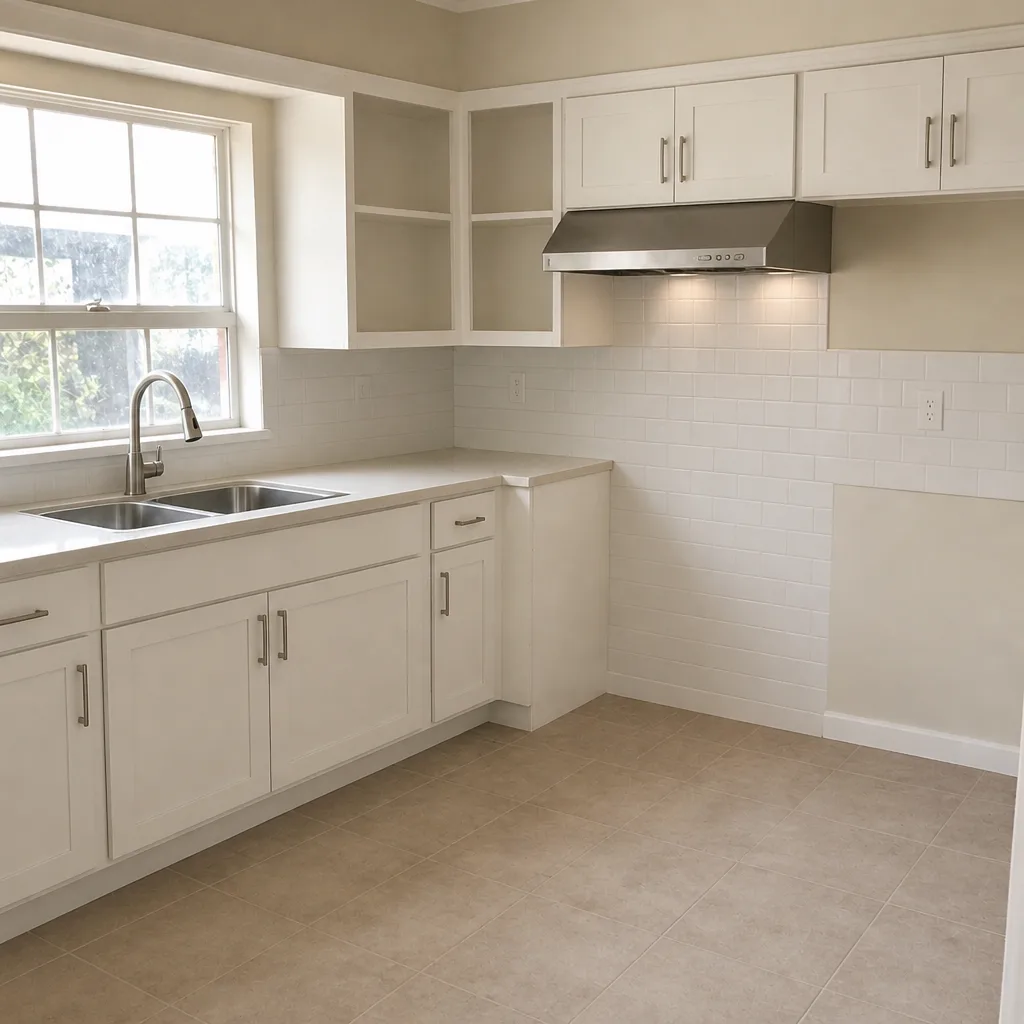 After
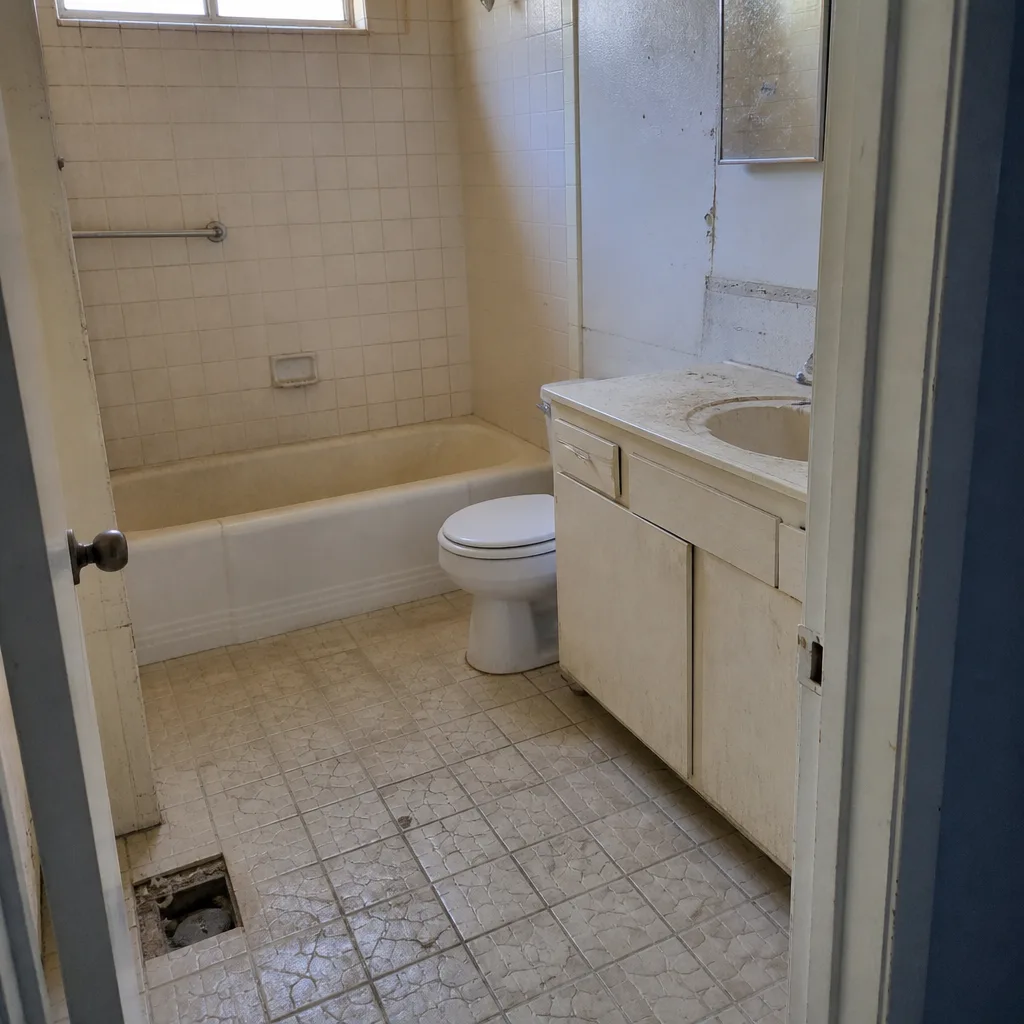 Before
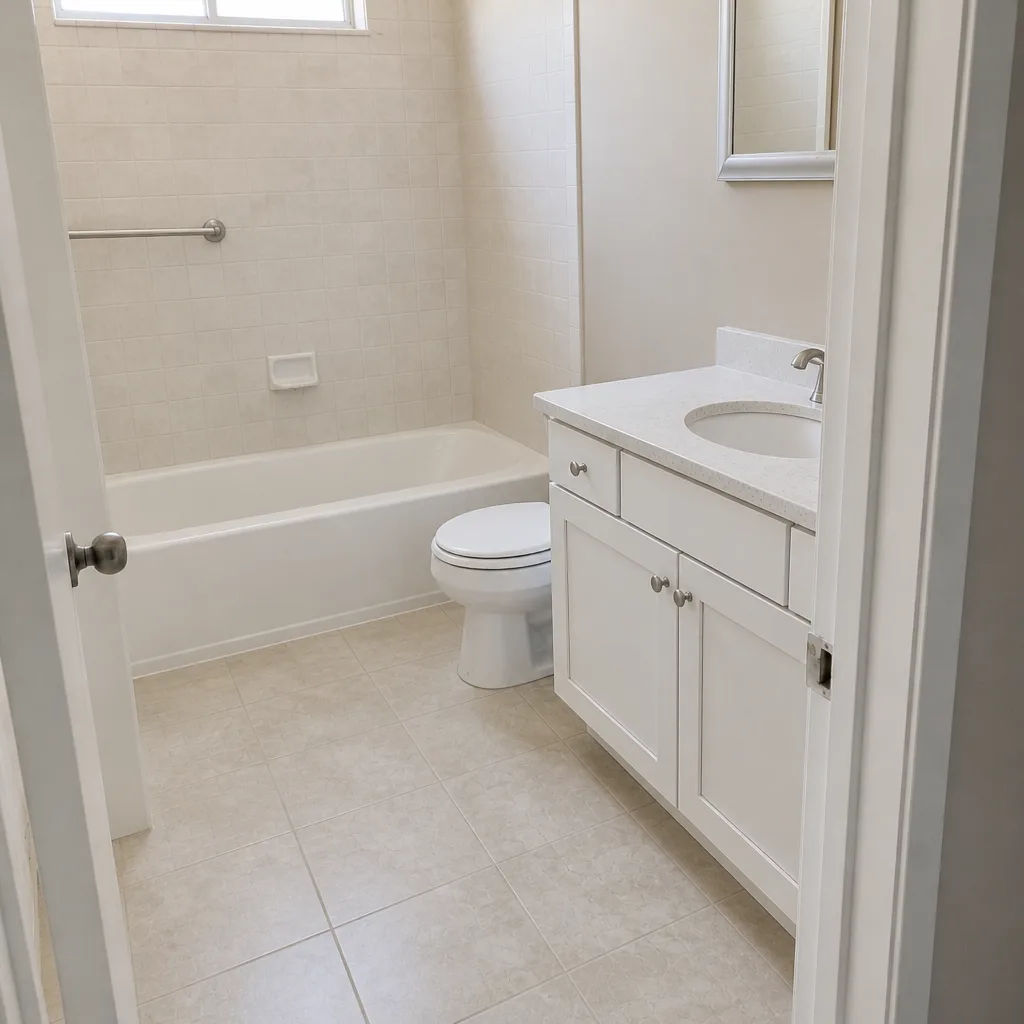 After
When to Call a Professional
Call a licensed contractor when the work requires a permit, when it touches gas, water, electrical panels, or structural framing, or when it involves installs that compound – cabinets, countertops, and tile. All three are the trades where a small error becomes a five-figure correction. Call us if you’ve started a DIY remodel and hit a wall (literally – a load-bearing wall) or if your owner-builder sub has walked off the job and you need a licensed GC to finish it and pull the permit. Bradford Remodeling Co Costa Mesa offers free estimates in Costa Mesa – call (855) 659-2556. We write the price down before any work starts, and every completed project carries our 365-Day Done Right Promise: if the work fails within the guarantee period, we come back and correct it at no charge.
Frequently Asked Questions
Yes, in almost every case. Cosmetic work (paint, hardware, light fixture swaps on existing circuits, faucet swap) doesn’t require a permit. Anything else – moving cabinets, replacing countertops, changing plumbing, relocating electrical outlets, replacing a range hood, adding windows – requires a permit from the City of Costa Mesa Building Division. Cabinet swaps and fixture swaps are typically over-the-counter; anything that changes the footprint or structure goes to plan review.
Yes, but the liability falls on you. An owner-builder permit means you’re the contractor of record. California law requires you to disclose the owner-builder nature of the work to any buyer if you sell within one year, and you lose the ability to file a complaint against a licensed sub through the CSLB complaint process because there’s no contractor above the sub. If you’re hiring licensed subs anyway, having a licensed GC pull the permit shifts responsibility for corrections and inspection scheduling onto the GC. Call (855) 659-2556 for an exact quote – estimates are free.
Roughly $2,600 to $5,300 on a 200-square-foot Costa Mesa kitchen – about $1,800 to $3,500 for demo and hauling, and $800 to $1,800 for painting. That’s the safe DIY dollar range. Electrical, plumbing, cabinetry install, countertop fabricate and tile together represent $10,000 to $22,000 in labor on the same job and all require licensed trades and permit oversight. Call (855) 659-2556 to price out which line items are worth self-performing on your specific project.
The inspection fails, the job stops, and re-inspection has to be scheduled. Under a homeowner permit, you schedule and attend the re-inspection, coordinate whatever sub or trade has to correct the work, and absorb the delay – typically 4 to 6 weeks in our experience when the correction involves a sub’s callback. Under a contractor-pulled permit, the GC handles corrections and the re-inspection. Call (855) 659-2556 for a written scope that includes inspection coordination.
Yes. Unpermitted kitchen work often surfaces during buyer’s title review or lender appraisal, and it opens the door to buyer demands for re-inspection, credits at close, or rework to code. Costa Mesa’s permit history is publicly accessible, so an unpermitted finish-out comparing to nearby Costa Mesa sales is one of the most common reasons a sale stalls. Permitted, inspected work documented in the property file is a clean selling point – the cost of pulling the permit is minor against the cost of a stalled sale.
Yes. We regularly take over half-finished kitchens, whether the homeowner ran out of time or a subcontractor walked off. We’ll walk the site, verify what was completed and permitted, pull the permit if it wasn’t pulled correctly, and write a fixed scope and written price for the remainder before any work starts. Every project we complete is covered by the 365-Day Done Right Promise and a written guarantee in your hand at close. Call (855) 659-2556 for a free estimate.
The Bottom Line
The line between safe DIY and licensed work in a kitchen runs through the permit application. Paint, hardware, fixtures, and faucets save real money and carry no liability. Everything behind the wall – rough-in, structural, gas, cabinets, countertops, tile – belongs to licensed trades with an inspected permit. Pulling an owner-builder permit is legal in California, but it makes you the contractor of record, triggers the one-year resale disclosure, and removes the CSLB protection you’d otherwise have against a sub’s defects. The hybrid model – homeowner demo and paint, licensed trades for everything else – is where the savings live without the exposure. In Costa Mesa’s cool coastal climate, permit timelines and cure times both run longer than inland; plan for them. When the job crosses into permit territory, call a licensed contractor, get the price in writing, and make sure the guarantee is on paper.
Written by the team at Bradford Remodeling Co Costa Mesa.