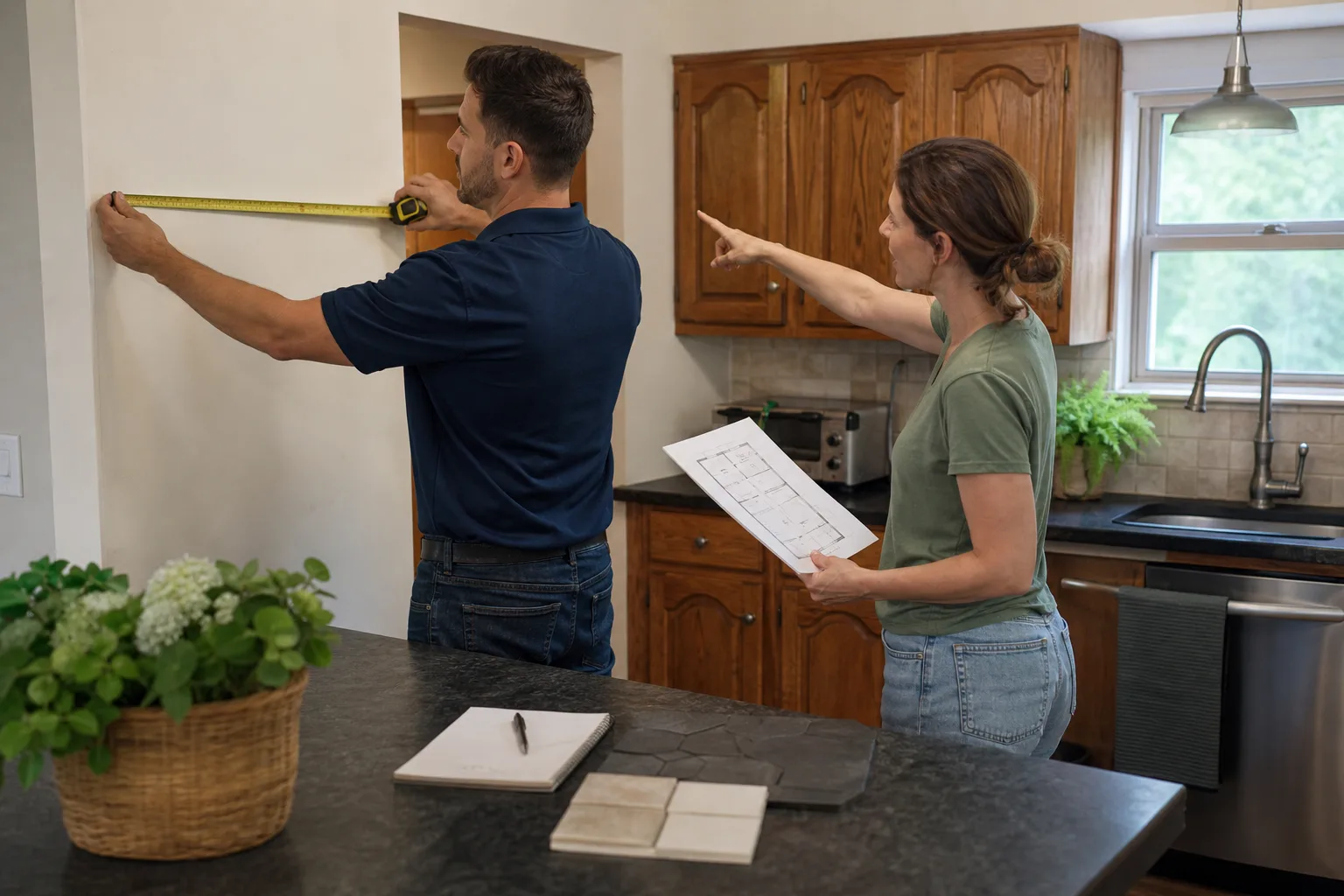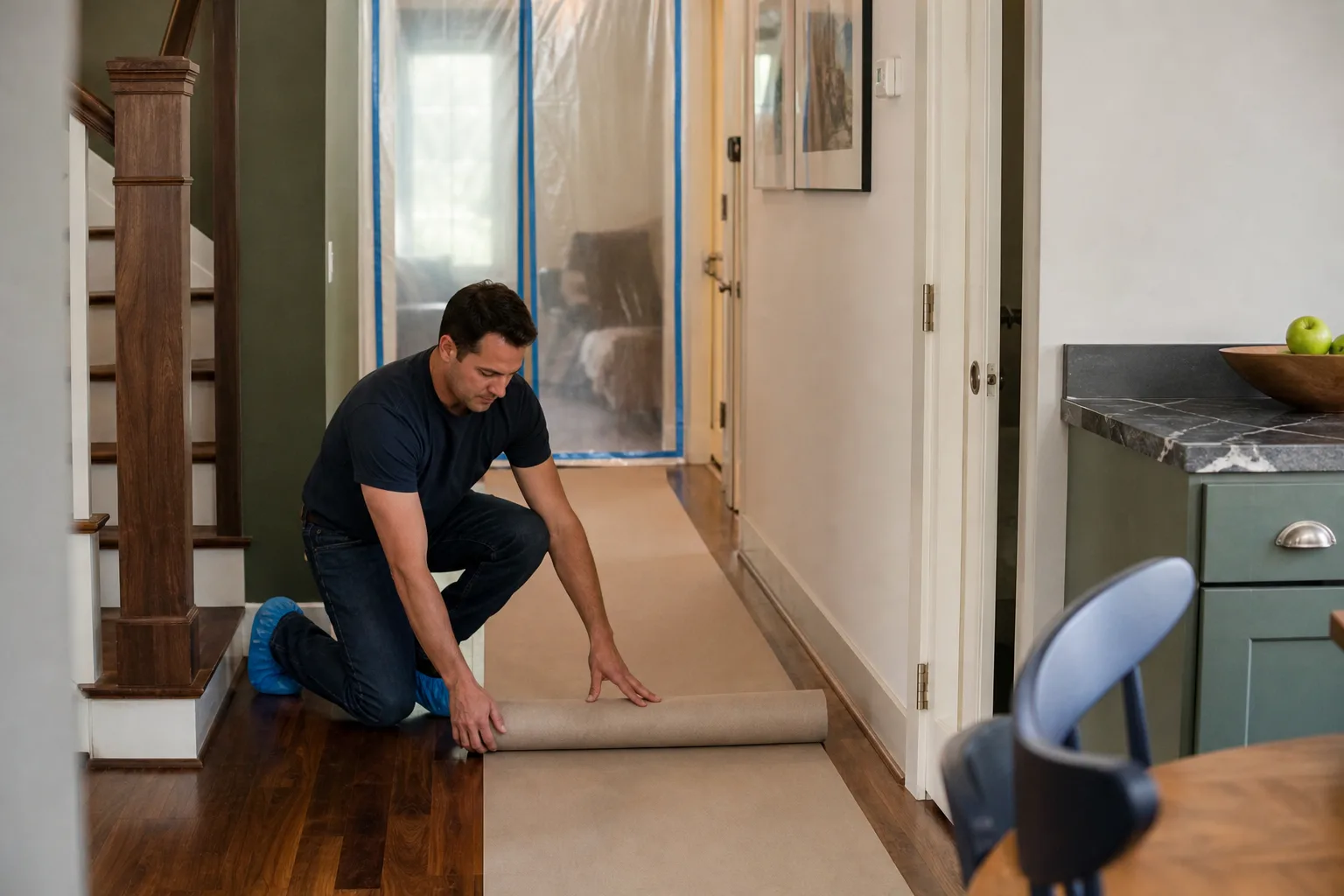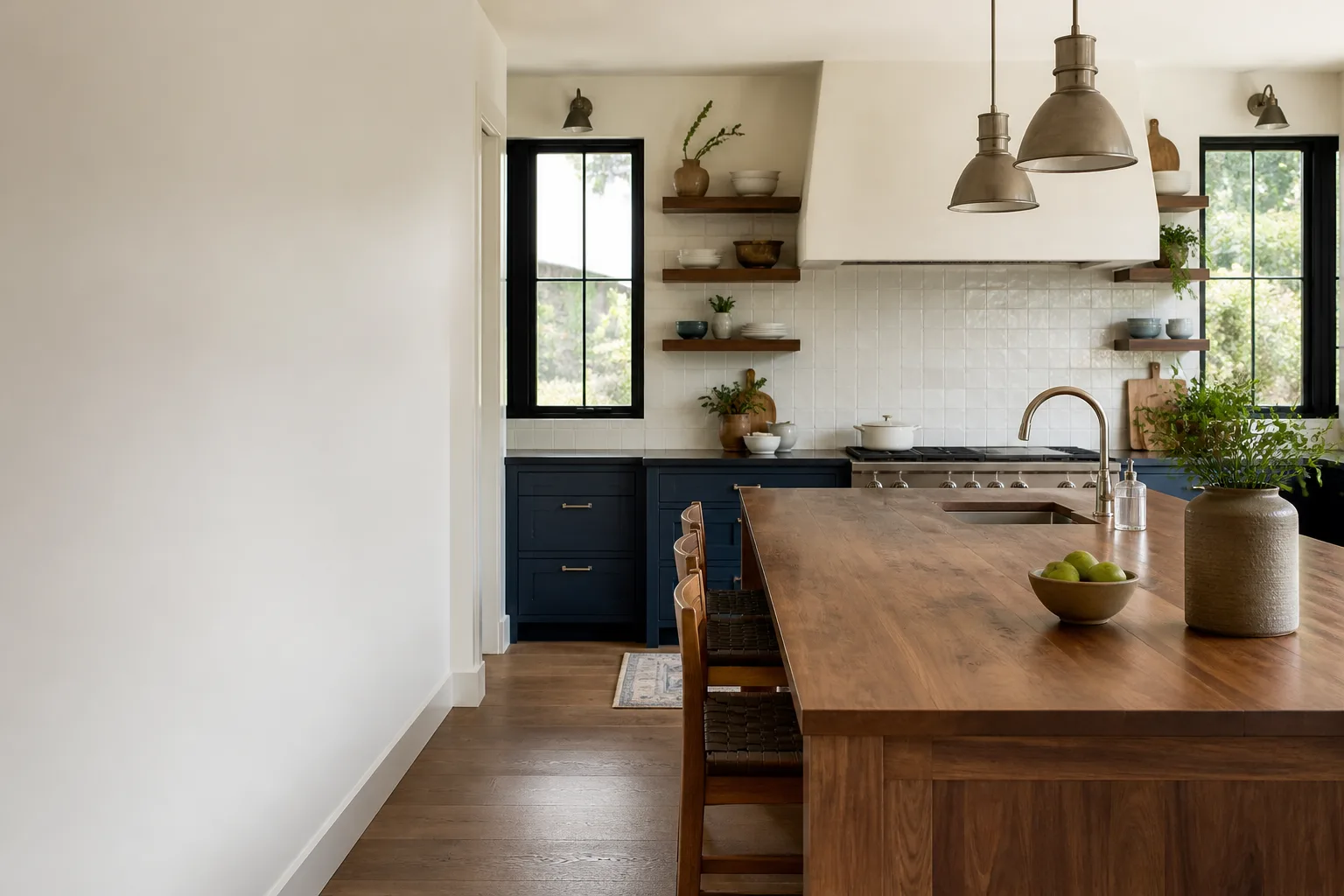

Free written scope consultation - allowances, timeline, and change-order rules on paper before a single trade is scheduled
Styles & brands we work with
- Kitchen remodeling
- Bathroom remodeling
- Home additions & ADU
- Roofing
- Windows & doors
- Driveway & pavers
- Fence
See the difference
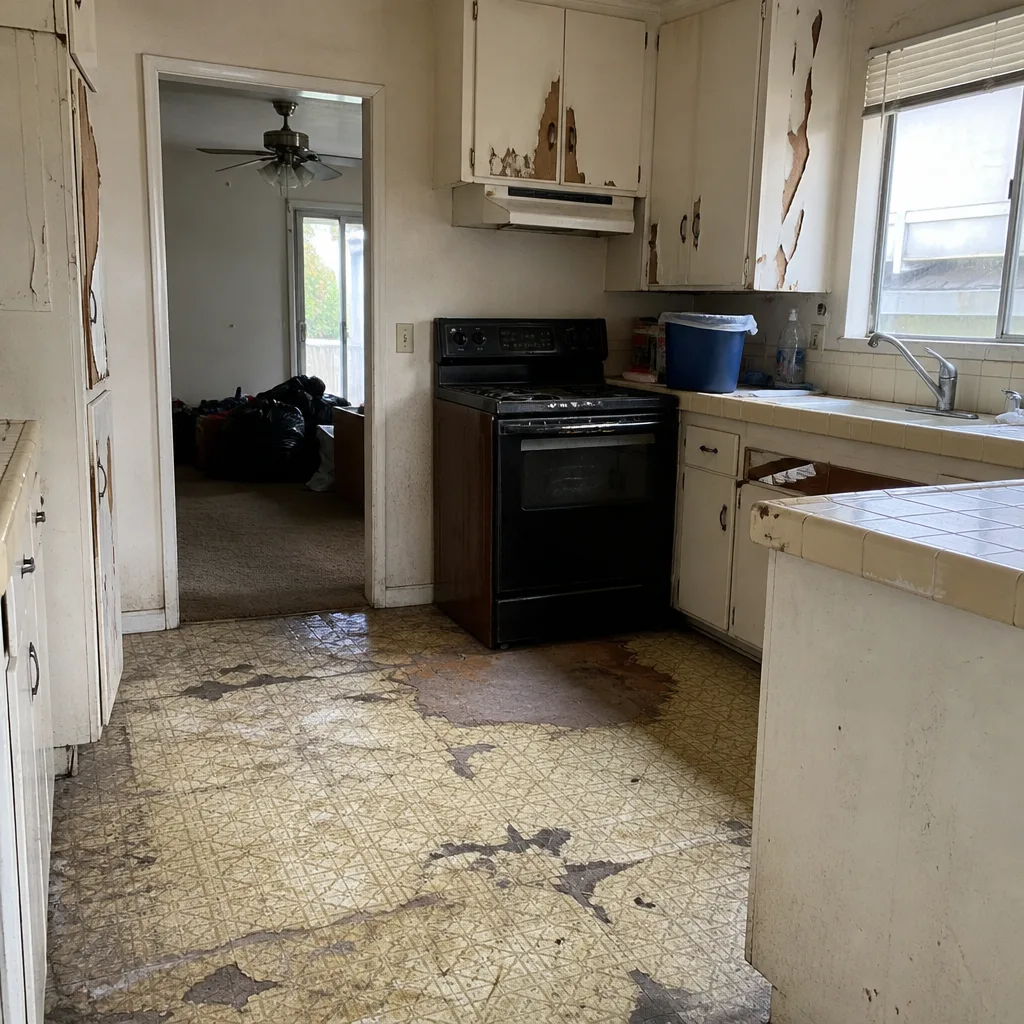 Before
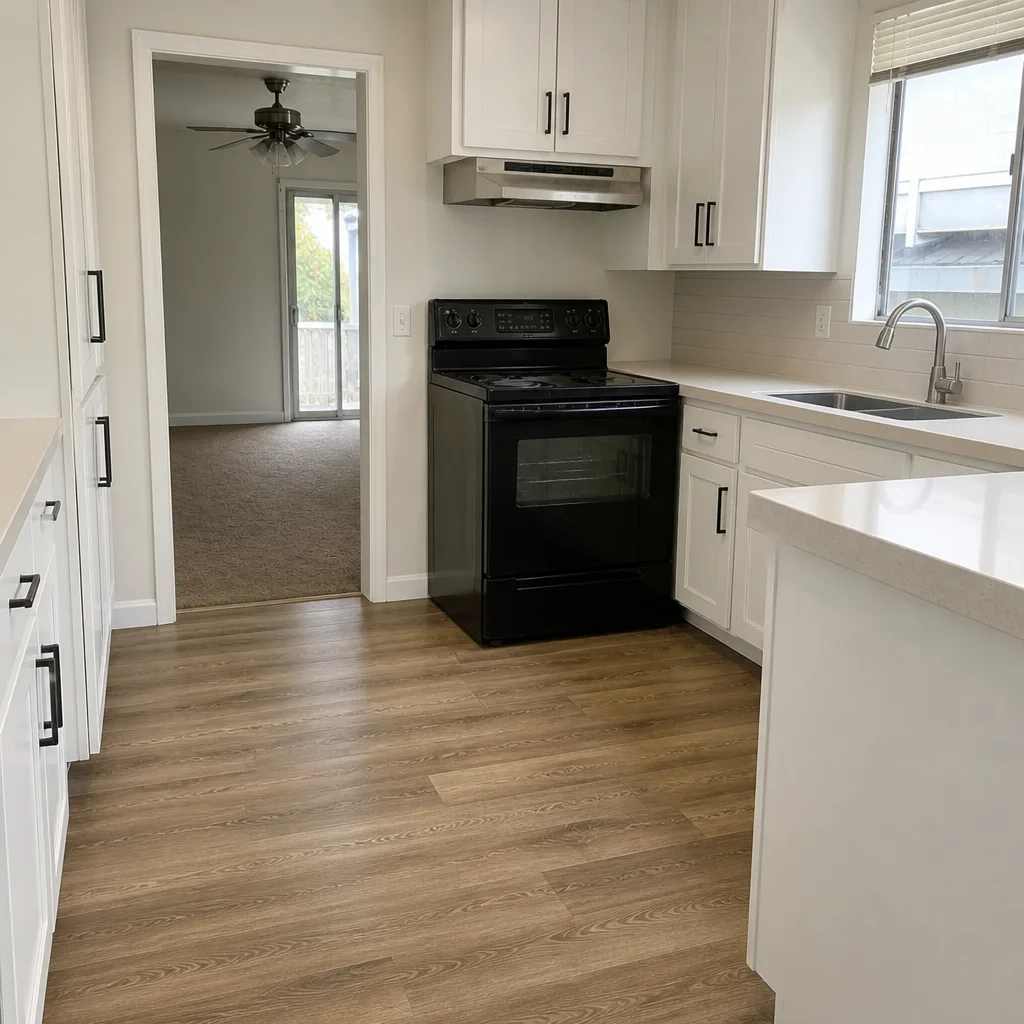 After
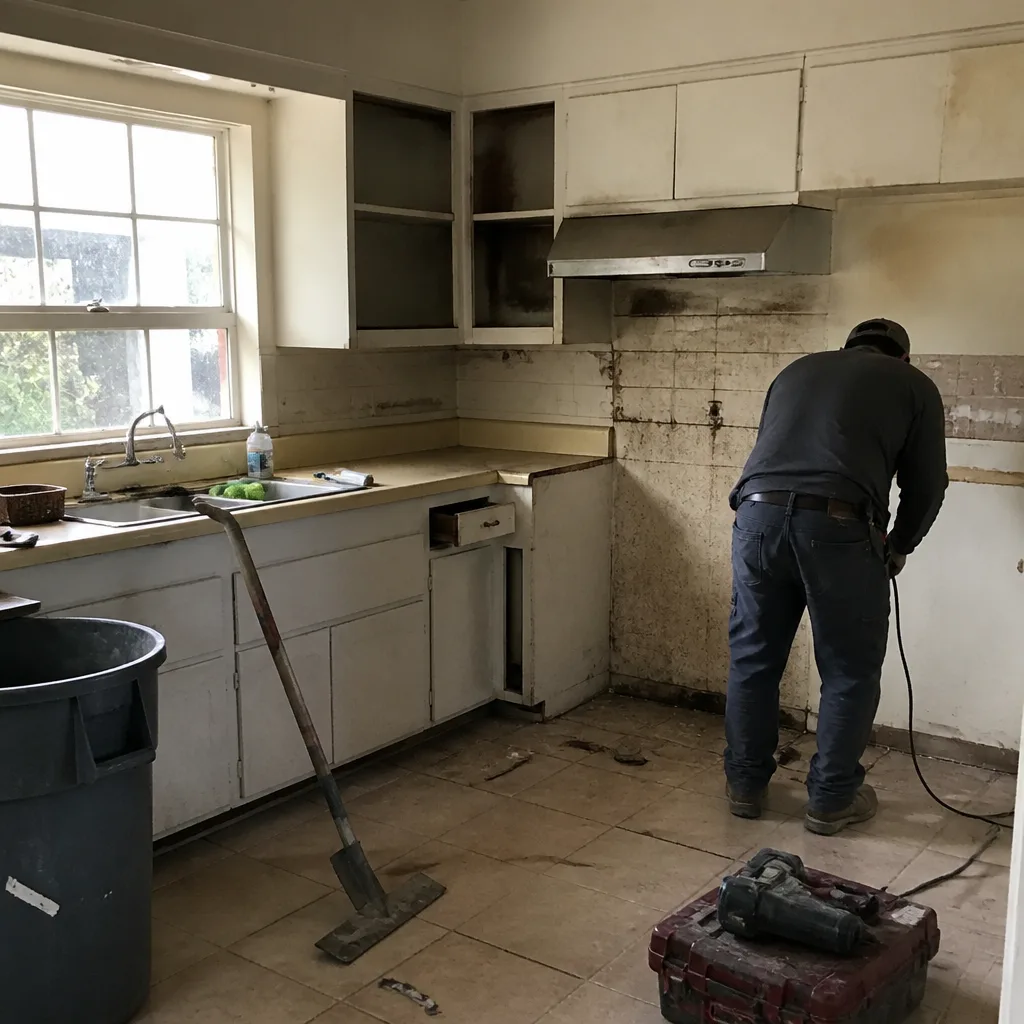 Before
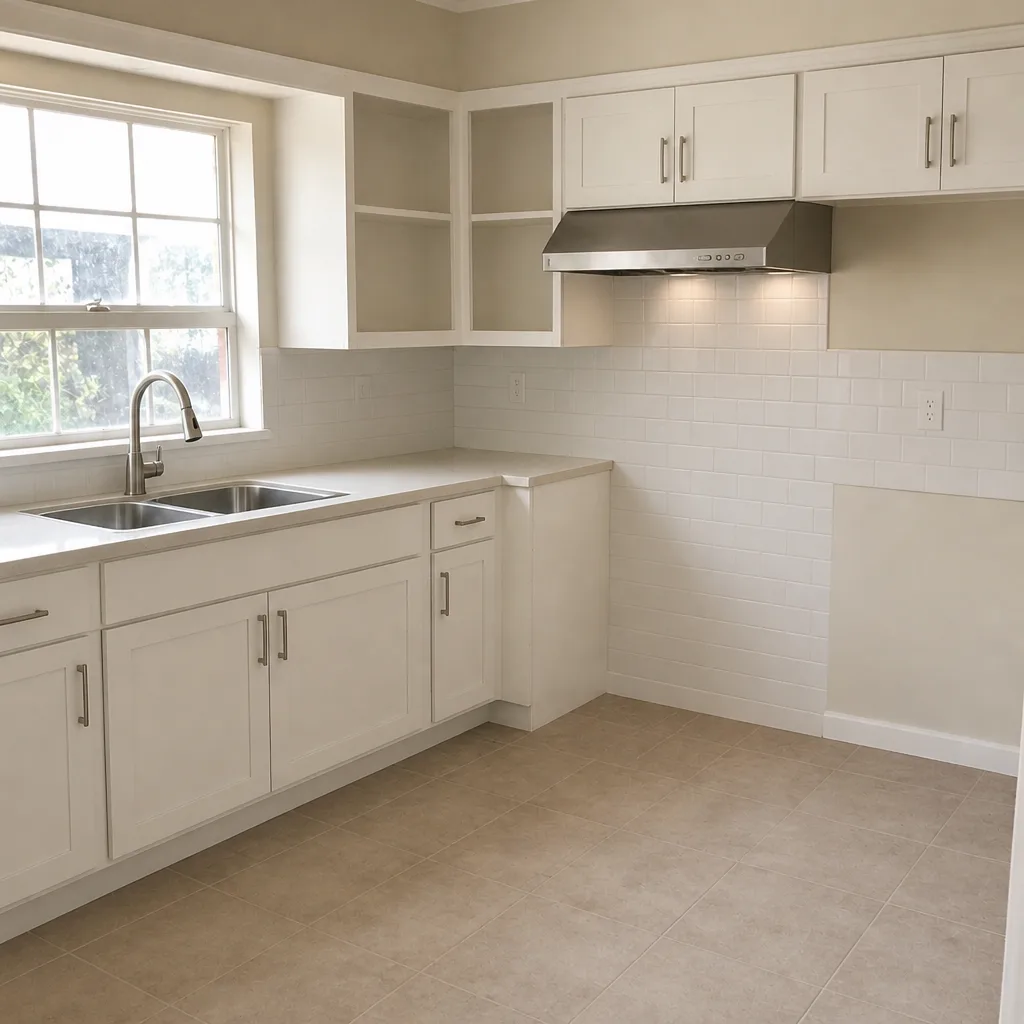 After
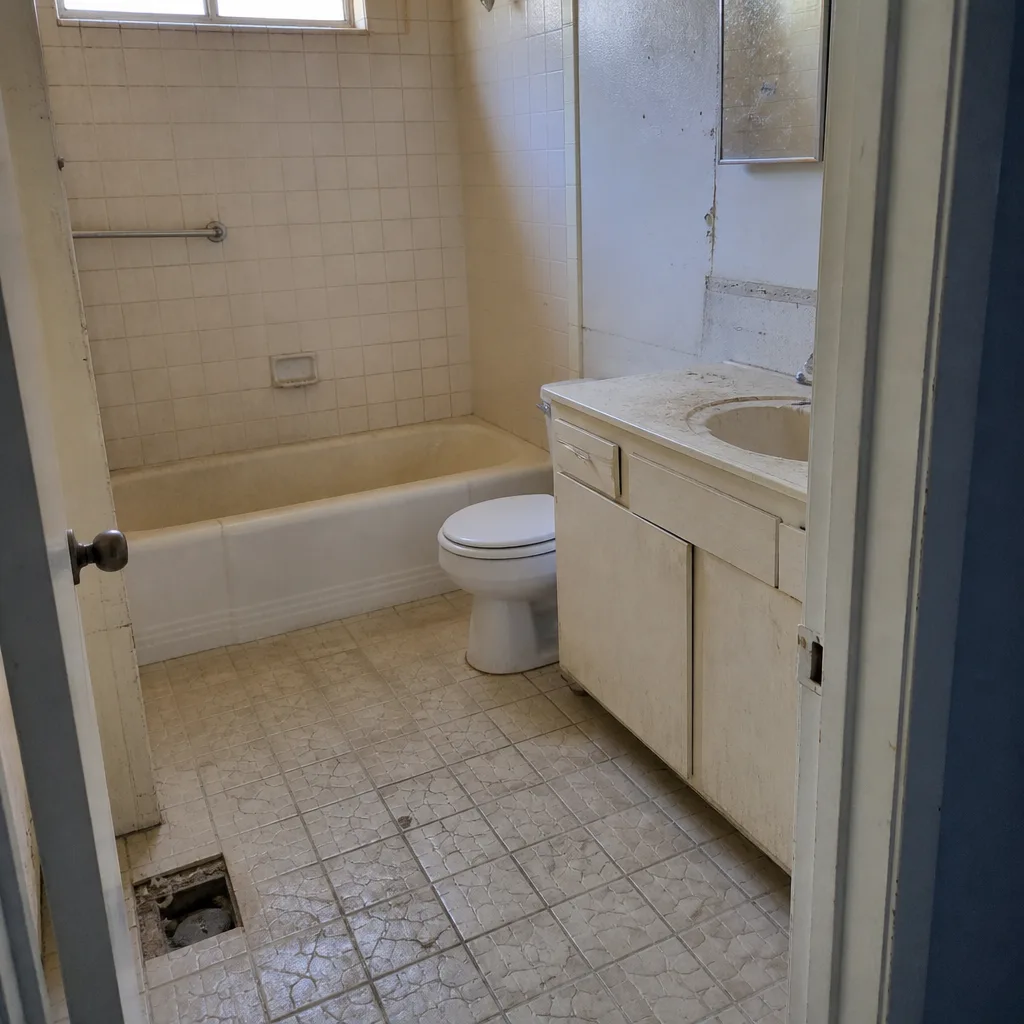 Before
 After
Tile vs Vinyl Plank Kitchen Flooring in Costa Mesa: The Short Answer
Choose luxury vinyl plank (LVP) with a built-in moisture barrier if your Costa Mesa kitchen sits on a 1950s or 60s on-grade concrete slab in a west-side tract home. Choose porcelain tile set over a crack-isolation membrane if you’re working on a structurally consistent subfloor, in a rebuilt Eastside custom home, or anywhere you want a hard surface that shrugs off a dropped cast-iron pan. The material choice matters less than what’s under it. A 1958 slab off Victoria Street and a rebuilt custom house near the Upper Newport Bay bluffs two miles away are two different substrate problems, and that difference alone can flip the right answer. Call (855) 659-2556 and we’ll tell you which side of that line your kitchen is on.
Key Takeaways
- West and central Costa Mesa’s 1950s-60s tract homes usually sit on older on-grade concrete with some moisture vapor drive. LVP floats and tolerates that. Tile bonded directly to a settled slab cracks grout within a year.
- Salt-laden onshore air near Newport Bay and the Santa Ana River eats exposed metal floor transitions. Specify stainless or powder-coated aluminum thresholds either way.
- Full kitchen remodels in Costa Mesa run $14,000-$45,000. Flooring is one line of that, and the substrate work underneath is where budgets actually move.
Why Costa Mesa’s Climate Tips This Decision More Than Looks Do
Most comparison guides treat tile vs vinyl plank as a style question. In Costa Mesa it’s a moisture-and-substrate question first. We work in a coastal-moderate climate with a persistent marine layer, and that layer keeps slab moisture and wood subfloor humidity in a narrow but real band year-round. You don’t get the seasonal dry-out that inland markets rely on to keep a slab stable.
What that means in practice: on the west side, where so much of the housing stock is pre-1960s small-lot stucco tract, kitchen slabs are old, and many have picked up minor moisture vapor drive over six decades. Floating an LVP plank over a proper moisture-barrier underlayment handles that. Bonding a tile directly to the same slab, without a crack-isolation membrane, is how you end up with cracked grout lines and hollow-sounding tiles within the first year. The fix costs less upfront than the redo.
Salt air is the second local factor. Onshore wind off the Santa Ana River and Newport Bay accelerates corrosion on any exposed metal trim at floor transitions – grout lines meeting a metal threshold, the trim where a plank edge meets a sliding door track. It’s a small spec detail and an easy one to skip. Skip it and you’re replacing those thresholds in about five years. Specify stainless or powder-coated aluminum. We write that into the material spec.
Common Scenarios We Walk Into in Costa Mesa Kitchens
These aren’t hypotheticals. They’re the recurring situations we see when we open up a Costa Mesa kitchen and pull back the old flooring. Each one points toward a different answer.
- A 1960s tract slab on the west side with a settled crack running through the kitchen. Tile bonded across a moving slab will telegraph that crack up through the grout. LVP floats over the movement and stays put. If you want tile anyway, it needs a crack-isolation membrane, which adds cost and floor height.
- A kitchen with an unpermitted prior addition bumping out the back wall. Those additions often leave the subfloor planes between the original section and the added section uneven. Tile bonded across that joint cracks at the seam. LVP floats independently of the structure, so it bridges the transition. We flag these because tighter, built-out lots mean additions and ADUs are everywhere here, and past work isn’t always on record.
- A rebuilt Eastside custom home with a level, engineered subfloor. Here tile is the cleaner call. A consistent substrate takes a bonded tile floor without drama, and the hard surface holds up to heavy kitchen traffic for decades.
- Any kitchen where the owner wants the finish to look intentional. On tile jobs we coordinate grout color to the countertop slab – Cambria and Caesarstone surfaces matched to the floor so the palette reads as one plan, not separate purchases.
Tile vs Vinyl Plank: A Straight Side-by-Side
| Factor | Porcelain Tile | Luxury Vinyl Plank |
|---|---|---|
| Substrate requirement | Rigid, consistent; needs crack-isolation membrane over older slabs | Floats; tolerates minor vapor drive and uneven planes with the right underlayment |
| Salt-air impact | Surface unaffected; metal transitions still corrode unless stainless or coated | Surface unaffected; same transition caveat |
| Crack risk on settled slab | High without membrane | Low; floor moves independently |
| Durability under heavy use | Decades; stands up to dropped weight and water | Strong, but check the wear-layer mil thickness on the plank you buy |
| Best fit in Costa Mesa | Rebuilt homes, consistent subfloors, engineering firms wanting a hard finish | 1950s-60s west-side slabs, uneven additions, faster installs |
The recommendation: default to LVP with a moisture-barrier underlayment on older Costa Mesa slabs, and default to tile with a crack-isolation membrane where the subfloor is level and consistent. Either way, get the substrate inspected before you buy a single box of flooring. If the plan calls for a broader remodel, our Kitchen Remodeling team handles the full scope, substrate work included.
What “Squared Away” Looks Like on a Flooring Spec
Most of the flooring headaches we hear about from Costa Mesa homeowners trace back to a spec that was never written down. A plank was chosen, then backordered, then swapped at the door for a thinner wear-layer SKU. Or a tile was quoted without a membrane and the contractor “forgot” it. The Garrison Standard closes that gap: every price and every material specification goes in writing before a single tool comes out, and it doesn’t move at the door. If the spec calls for LVP, the brand and the wear-layer mil thickness are locked in the document. If it calls for tile, the membrane is a line item, not a surprise.
Every completed project also carries the 365-Day Done Right Promise – a full written guarantee. If the floor fails inside that window, we come back and correct it at no charge. New floors go down over new subfloor prep, and if the prep wasn’t right, you’ll know within the year. The guarantee is our commitment that it was.
How Much Does a Kitchen Floor Project Run in Costa Mesa?
A full kitchen remodel in Costa Mesa typically runs $14,000-$45,000, with flooring and substrate prep occupying one portion of that total. On its own, flooring costs are driven by the surface you pick and how much subfloor work is needed before the first plank or tile goes down. Here’s the line-item range we work from:
- Full kitchen remodel (including flooring): $14,000-$45,000
- Small kitchen remodel: $9,000-$20,000
- Countertop installation (often paired with a flooring refresh): $2,000-$6,500
- Backsplash installation: $800-$2,500
- Kitchen island installation: $3,000-$10,000
Substrate prep – patching a settled slab, leveling an uneven addition transition, or installing a crack-isolation membrane – is scoped and priced in writing before work begins. No numbers that move at the door. We call it out specifically because it’s the piece most estimates leave vague, and it’s the piece that determines whether your floor lasts.
If the kitchen is getting a broader refresh – new counters, a sink, or a whole layout change – it’s worth looking at Kitchen Remodeling in Costa Mesa as the umbrella project. Flooring decisions are cheaper to get right when they’re made alongside the countertop spec, since grout color and slab tone want to be chosen together. For questions away from the floor, our home page has the rest of what we do.
FAQs
Vinyl plank is usually the safer call in Costa Mesa’s older west-side tract homes because it floats over settled slabs and minor moisture vapor drive without cracking. Tile is the better fit on consistent, level subfloors – especially in rebuilt Eastside homes – where a crack-isolation membrane isn’t needed. The substrate decides it more than the surface does. Call (855) 659-2556 for a free estimate and we’ll inspect what’s under your floor first.
Salt air doesn’t damage the vinyl or tile surface itself, but it accelerates corrosion of the metal thresholds and transition trims at floor edges. Specify stainless or powder-coated aluminum at those transitions and you won’t be replacing them in five years. Call (855) 659-2556 to talk through your transition materials – estimates are free.
Yes, but only with a crack-isolation membrane between the slab and the tile. Without it, tile bonded to a settled or cracked 1950s-60s slab will telegraph that movement into the grout lines within a year. The membrane adds cost and floor height, but it’s the difference between a floor that holds and one you’re redoing. Call (855) 659-2556 for an exact quote – estimates are free.
A full kitchen remodel in Costa Mesa runs $14,000-$45,000, with flooring and substrate prep as one part of that total. On its own, the cost depends on the surface and how much subfloor work is needed. We put the written price in front of you before any work starts. Call (855) 659-2556 for a free estimate.
Get Your Flooring Question Answered in Person
If you’d rather have it looked at than read about it, Bradford Remodeling Co Costa Mesa offers a no-pressure assessment in Costa Mesa – we’ll inspect the substrate, walk the spec, and put the price in writing. Call (855) 659-2556 for a free estimate.
Written by the team at Bradford Remodeling Co Costa Mesa, serving Costa Mesa, CA.